Skip to content







Edible packaging is now shifting toward the zero-waste movement and is made of bio-based and paper-based materials. Because plastic is spreading landfill waste, increasing the chances of pollution and waste. To reduce our dependence on plastic, Eco-friendly packaging materials have great importance. Because there are strict regulations about the packaging made of non-recyclable materials. A brand can get more value by following these consumable solutions when it comes to edible packaging.
In this in-depth and useful piece of content, I have utilised my experience and knowledge to help you learn in detail about edible packaging, its types, drawbacks, and future.
What is Edible Packaging?
A packaging that is designed to be consumed with the food or biodegradable, and also keeps the products safe from contamination. To ensure the 100% protection and promised quality, this packaging is made of various consumable materials, including plant-based materials, including sheets, films, casein, and seaweed, with coatings and layers. They keep the edibles safe and sound for end users and maintain their freshness and quality.
These are the packaging solutions that are consumed with the food, and they do not need the complete process to recycle them like the other materials.
Why Packaging is Important for Edibles?
With the availability of bio-materials and plant-based materials, consumable food packaging is a great choice in the modern industry to wrap food items for longer protection, reducing waste and pollution. Along with food preservation, they are also vital to enhance the convenience of customers and promote the eco-conscious image of the brand.
Edible packaging is also an affordable source, and needs secondary packaging to keep it safe from moisture, dust, and other harmful physical and environmental factors.:
To help you gain more insight, here are some range of edible packaging types:
Various Types of Edible Packaging: Clear the Concept
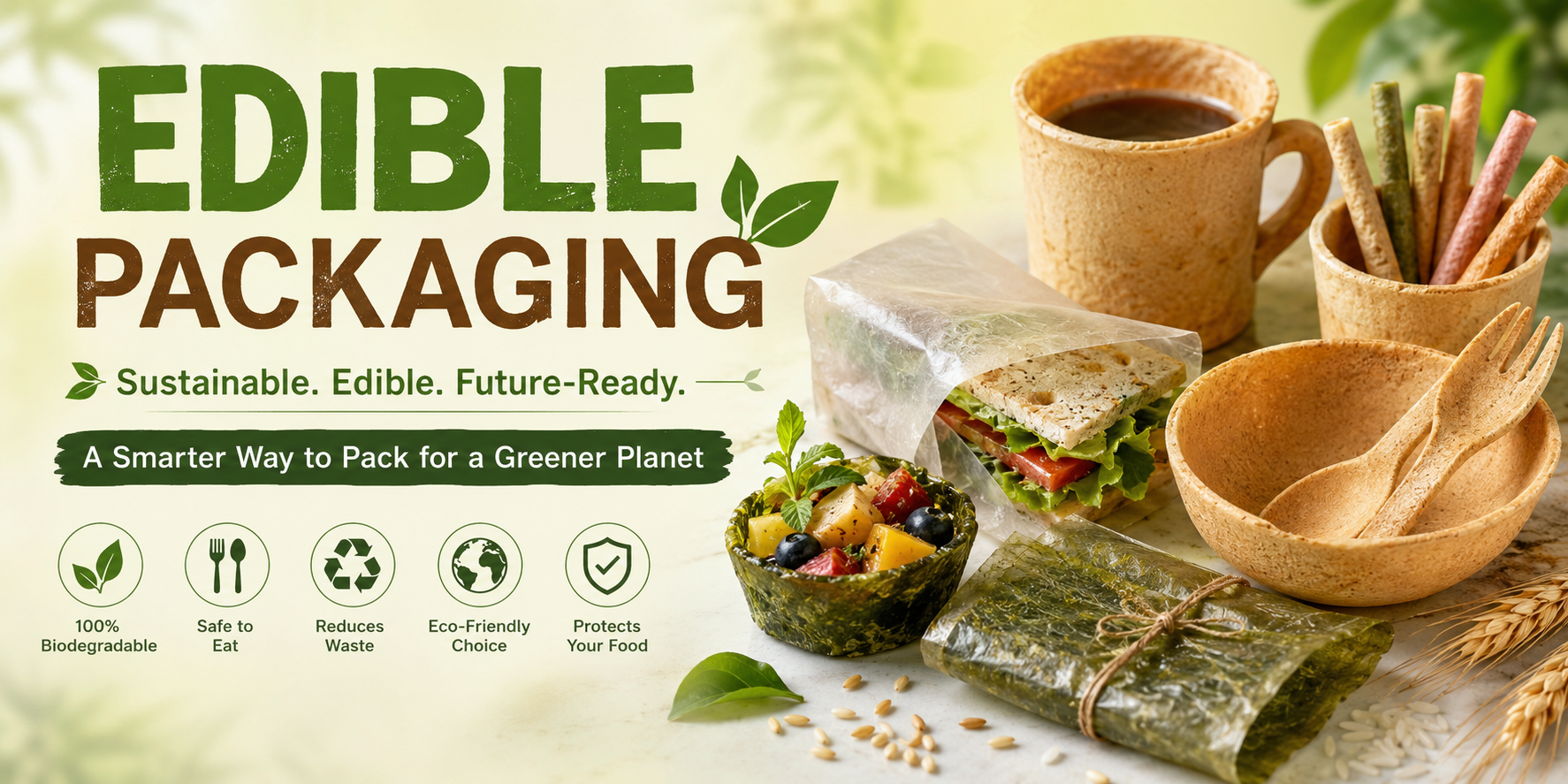
You have also noticed in the modern market the use of cookie coffee cups, straws, fruit-like casings, and candy wrapping that are made of potato fibres and rice paper. By choosing such calibre packaging, brands can set a more reputable image in their solutions:
Straws
To reduce the use of plastic straws, which results in the spread of plastic waste, in this section, you will learn about the modern innovations in edible packaging. Such as:
- Tasteless pasta: Made of wheat and water.
- Fruity Apples: They are made from leftover apple fibres.
- Sweet Sugar Straws: Made of some fruits and consist of various ingredients, including alcoholic flavours.
Food businesses manufacture these straws as sweet snacks with their various flavoured beverages. You have noticed that the pasta snacks come with the hot beverages,which are completely consumable or biodegradable.
Spoons
Edible spoons are better than single-use plastic, a great innovation and an Eco-friendly alternative. They are made of natural plant based flavours and materials, such as wheat, oat, rice. They are used for hot beverages and food items and can hold them up to half an hour without getting soggy. These spoons can easily be eaten or composted after complete use.
If any bakery brand offers its food items, it can offer these items in vanilla, Cocoa, Oregano chili, and other flavours.
As compared to plastic cutlery, they are safer for health and prevent chemicals reaching the Earth. By using edible spoons, brands can reduce the 40 billion plastic utensils in the USA and can play their role for a green environment.
Food Films
This type of edible packaging is made by the University of Nottingham. It’s also 100% biodegradable food film which is used as carbohydrates, such as starch, cellulose, proteins, and konjac flavour. They provide complete preservation to various types of food items and are also more eco-smart than plastic packaging for edibles.
They work as a coated surface and enhance the protection of food items from moisture and oxygen exposure. They are infused with antioxidants, antioxidants, and probiotics to ensure the quality of food items.
Eco Bags
After the eco-friendly packaging revolution, the Indonesian company manufactures consumable and biodegradable Eco-bags. They use cassava root to produce bags for the edibles, which can dissolve in warm water and do not leave impurities. But these bags are not consumed by humans but can cause food sources for fish, helping brands to prevent the poisoning of marine life because of plastic.
Bottles
Consumable bottles are a great alternative to single-use plastic bottles. They are made by using double membranes of sodium alginate and calcium chloride, having solid walls, and are best for the storage of liquid items. They are completely consumed and do not leave any harmful impact on the environment.
How to Make Edible Packaging: Technical Help
As you know, edible packaging is made of various materials and is considered a great alternative to single-use plastic. In the eco-conscious world, nothing is more beneficial for products and our Earth than biodegradable packaging solutions. Because modern consumers appreciate the efforts of any brands that are environmentally friendly.
There are some common resources used to manufacture edible packaging, including spoons and more, providing desired durability and keeping food safe. Because of their consumable features and biodegradable natures, they do not include synthetic, toxic materials, such as plastic. To produce them for a safe environment, they are made of wheat, seaweed, alginate, fruit, and other plant fibres.
After selecting the appropriate materials, laminations and coatings are manufactured by emulsifying or dispersing film-forming polymers into water or ethanol. Then it’s applied directly to the food items.
After the production of packaging, it passes some tests to check its quality. It should have a natural or taste less because it can mix with the products. So, to keep the quality maintained and to prevent the flavour mixing, these are the right packaging solutions.
Benefits of Using Edible Packaging
Because of their composition, durability, and biodegradable nature, edible packaging or consumable packaging provide a range of benefits to businesses. They are made by advanced approaches, so they also provide these perks:
Safeguard the Food Items
Their components are joined together to provide excellent durability. In some cases, packaging quality not only keeps the products in their actual taste but also ensures they are complete and never cause health risks. Therefore, brands are using edible packaging for the long-term freshness and storage of their food items for potential customers. You have also noticed that they are used in the retail food industry, for beverages, and to pack snacks.
Ensure Customer Satisfaction
Along with their sustainable nature, they are designed to meet the expectations of customers. Therefore, brands are shifting toward sustainable packaging solutions for their products. Potential customers also prefer to buy their products from businesses that ensure sustainable practices in their actions.
By using these consumable packaging solutions, you can ensure long-term commitment to the environment and can increase the number of loyal customers.
Versatile Packaging Solutions
Because of their availability in various compositions, they are used to pack various types of products, such as ice creams, snacks, sweet items, and hot and cold beverages. Brands also use them for wrapping various refrigeration items for food preservation.
Helping Brands to Go Green
Edible packaging is one of the most favourable sustainable packaging options for brands in the modern Eco-conscious industry, helping brands to reduce their footprints. They do not leave any trace after complete use by eliminating the waste cycle and circumventing recycling methods.
Because of their 100% sustainable nature and food-grade composition, they are safe for both products and the environment.
Cons of Edible Packaging
Just like the other packaging solutions, they also have some drawbacks along with the range of benefits. In today’s market, they need to build perfectly; otherwise, they make negative impacts on the environment. They are more sensitive to temperature and heat, so they can not be used for more delicate products because they require care during transit and storage.
Sometimes people do not trust the edible food packages, and they throw them away and see them as a disposable item.
Future Trends of Edible Packaging
Brands are now shifting toward more Eco-friendly packaging approaches with the changing trends and development. These sustainable packaging options help us to reduce the use of plastic, toxic chemicals, and other impurities that can cause waste and pollution. To make them more advanced and sustainable on the next scale, we need more development and research. In the food industry, we need care to use those materials that are not only sustainable but also chemical-free to ensure the preservation of food items.
Conclusion
Learning in detail about what edible packaging is can help businesses to understand the importance and types of consumable or biodegradable packaging. They are useful to provide a range of benefits to businesses of all sizes, helping them to reduce their footprint. By understanding their types and manufacturing tips and tricks, you can easily produce your required packaging or choose the best one for your food items. If you need biodegradable paper-based packaging, Contact Silver Edge Packaging – a reliable packaging company globally, offering the best solutions and services.