Skip to content







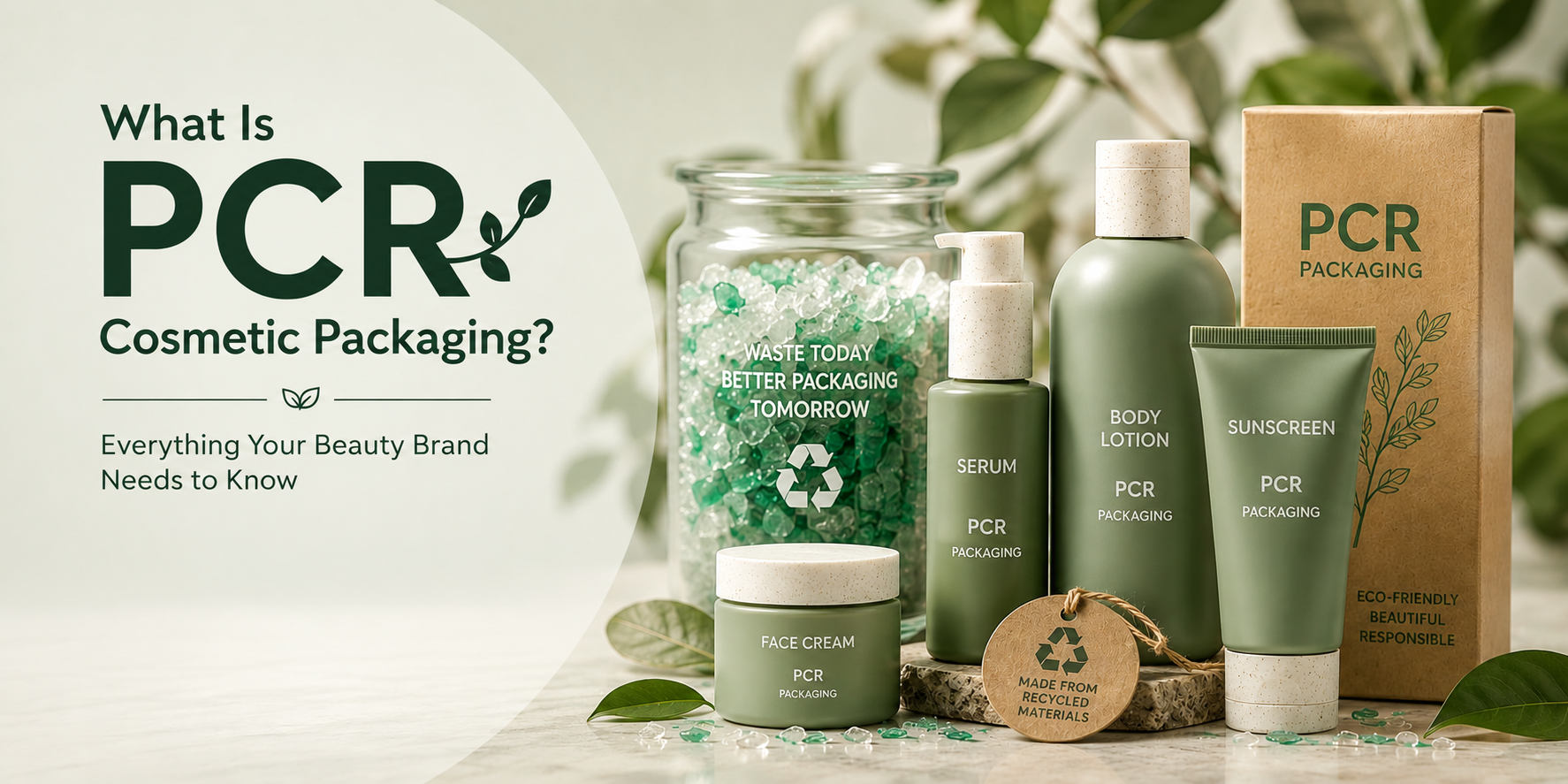
There has been a different but positive change in the cosmetic industry. Customers do not just want skincare products. They want to know what their favorite brand is contributing to nature. That is where PCR cosmetic packaging steps in. Has the term “PCR” been making you all wonder what it really means for your brand? You are in the right place.
Silver Edge Packaging offers cosmetic brands the opportunity to make sustainable packaging choices every single day. But first, let’s understand clearly and show you why PCR packaging is so important.
What Does PCR Mean in Cosmetic Packaging
Post-Consumer Recycled refers to waste used and discarded by consumers, which is then collected and turned into bottles, jars, tubes, boxes, and caps for beauty products.
The bottle you tossed into your recycling bin gets collected, cleaned, melted down, and changed into resin pellets. Those pellets are then used to make brand cosmetic packaging. That is PCR in action.
In the beauty industry, you will often hear two related terms:
- PCR: Materials that came from items consumers already used and recycled.
- PCR Resin: plastic made from used consumer items like beverage bottles, milk jugs, and containers processed into pellets and molded into new packaging.
PCR packaging offers durability; your lotion bottle, serum pump, or foundation jar will still hold up as well. It just does so in a more sustainable way.
Why Is PCR Packaging Growing Fast?
The beauty and personal care industry generates a significant amount of plastic waste every year. Consumers are paying attention. According to Nielsen’s Global Responsibility Report, 46% of consumers are willing to pay more for products from brands. That is half your potential customer base actively choosing eco-conscious options.
Here is what is pushing PCR adoption further.
- Government regulations: Now require brands to use a percentage of post-consumer recycled content in their packaging.
- Brand commitments: Major beauty brands have pledged to increase recycling of used materials over the next decade.
- Consumer demand: Eco-friendly products packaging.
How Is PCR Packaging Made?
Understanding the process helps you appreciate what you are actually getting when you choose PCR materials.
- Collecting the Consumer Waste: Used plastic containers, bottles, and packaging are collected through recycling programs. The collected materials are sorted by material type. For example, PET is commonly used in water bottles. HDPE is used in milk jugs and shampoo bottles.
- Processing: Sorted materials are cleaned, shredded, and melted down to remove impurities.
- Forming: Then the melted material is formed into resin pellets. These pellets become the material for new packaging. The pellets are molded into packaging components like bottles, jars, tubes, caps, and boxes.
This entire process uses less energy than producing virgin plastic from fossil fuels. Studies show that producing PCR resin can reduce energy consumption by up to 70% compared to plastic production.
What Types of PCR Cosmetic Packaging Exist?
PCR materials are incredibly versatile. They can be used across a range of cosmetic packaging formats.
- PCR Bottles: Commonly used for shampoo, conditioner, body wash, and lotion—they are often made from recycled PET or HDPE.
- PCR Jars: Used for face creams, body butters, and balms.
- PCR Tubes: Popular for sunscreen, foundation, and hand cream.
- PCR Pump Dispensers: Used for serums, toners, and moisturizers.
- PCR Paperboard Boxes: Packaging for cosmetic products. Made from paper fibers and used to wrap bottles, jars, and tubes.
PCR vs. Virgin Plastic vs. Sustainable Options
| Feature | PCR Packaging | Virgin Plastic | Recyclable Packaging | Compostable Packaging |
| Made from | Consumer waste | New fossil fuels | New materials | Plant-based materials |
| Carbon footprint | Low | High | Medium | Low to medium |
| Durability | High | High | High | Low |
| Consumer recyclability | Not recyclable again | Recyclable | Recyclable | Compostable at facilities |
| Brand sustainability signal | Strong | Weak | Moderate | Strong |
Benefits of PCR Cosmetic Packaging for Your Brand
PCR packaging is a strong middle ground. It reduces impact without requiring consumers to change their disposal behavior. Your brand does the lifting by choosing recycled content. So customers benefit automatically.
Business Benefits of PCR Packaging
- Strengthens brand positioning in the eco market
- Meets growing retailer and regulatory requirements
- Attracts beauty consumers who prioritize sustainability
- Adds credentials to your brand story
Consumer Benefits of PCR Packaging
- PCR packaging helps consumers apply beauty products without a guilt feeling
- Customers feel purchasing from environmentally responsible brands
Environmental Benefits of PCR Packaging
- Reduces the demand for plastic and fossil fuels
- Lowers carbon emissions during production
- Supports the economy by keeping materials in use
PCR Packaging and Your Cosmetic Boxes
When people think about PCR packaging, they often focus on the plastic primary containers. But your secondary packaging matters just as much. Secondary packaging refers to the boxes that hold those bottles and jars.
Cosmetic boxes can incorporate PCR content through:
- Recycled paperboard made from consumer paper fiber
- Coated Recycled Board with a clay coating for printability
- Kraft paper from recycled, an eco-friendly fiber
Printing on a PCR packaging is done through modern digital printing and offset printing technologies. Your brand colors, logo, and finishes, like matte and gloss lamination, can all be applied cleanly. This ensures your cosmetic packaging looks just as premium as it feels responsible.
Final Thoughts
PCR materials are made from things that people have used before. This gives your cosmetic packaging a story to tell. Types of PCR packaging include bottles, jars, tubes, pump dispensers, and paperboard boxes. By using PCR packaging for your cosmetics, you offer customers a sense of what your company stands for before they even look at what’s in your products.
So, are you ready to start using PCR packaging? At Silver Edge Packaging, we understand that sustainable packaging must also be beautiful, functional, and brand-right. Our team works with brands of all sizes to deliver custom packaging solutions that meet both your business goals and your sustainability commitments.
Start making a change today and see how your cosmetic products sell more, with PCR packaging.