Skip to content







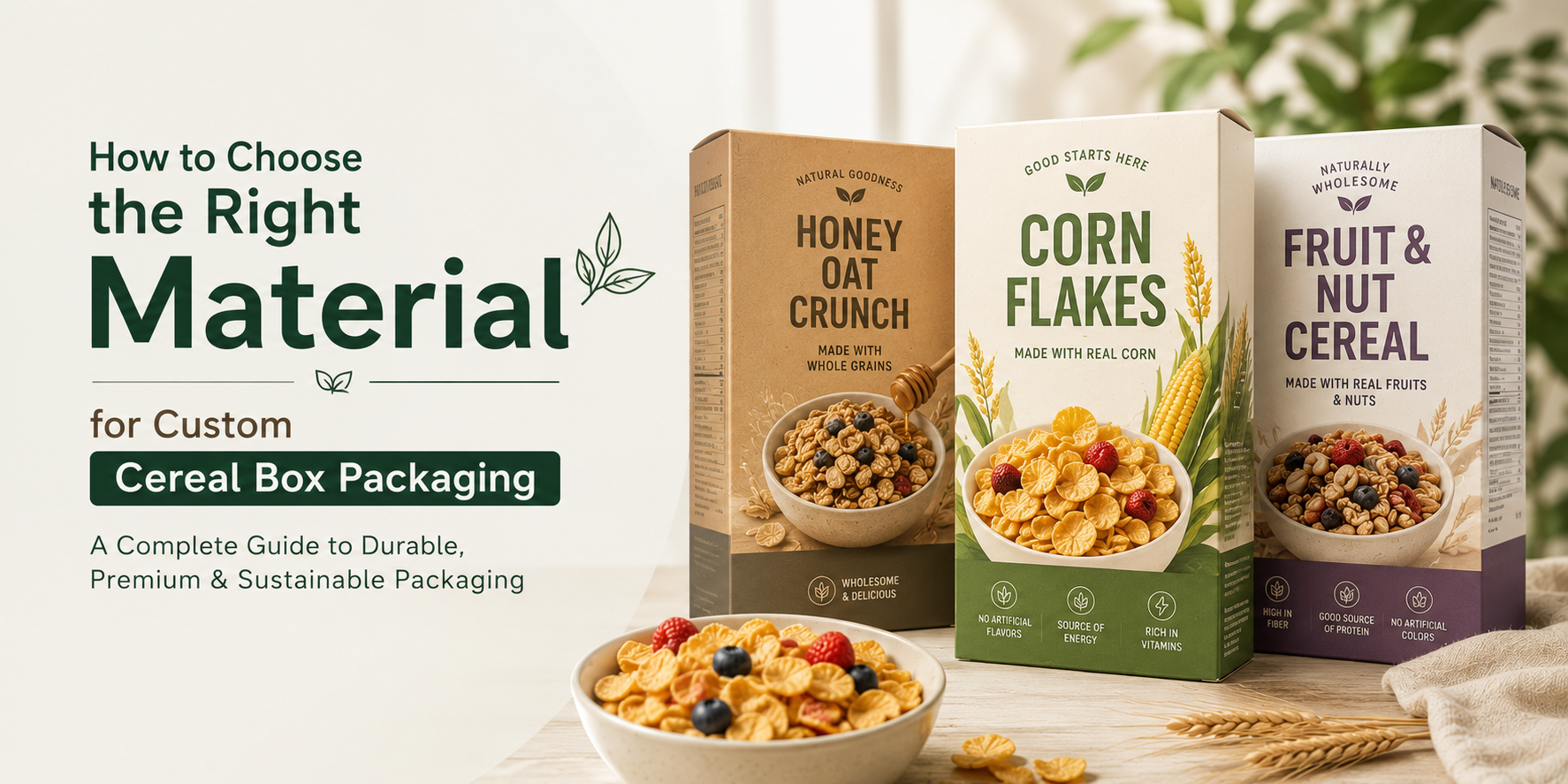
The demand for cereal in the USA was valued at $18.2 billion in 2025, increased to $18.91 billion in 2026, and is projected to reach $27.72 billion in 2036. Do you think it would be just to choose poor-quality packaging for these highly demanded snacks? Absolutely not! Therefore, cereal producers use FSC-certified materials to manufacture cereal box packaging, providing complete protection and ensuring sustainability. Various high-quality materials are used to manufacture these packaging boxes, providing the desired durability, premium quality, and thickness at affordable rates.
Are you curious about how to choose the right material for your custom cereal packaging that supports the desired printing, helps preserve your cereal’s freshness, and reduces your footprint? Stay tuned with us! In this article, I will draw on my 10+ years of experience in the packaging industry and rigorous research to help you choose the right materials for your product packaging boxes.
Importance of Cereal Packaging Material
Cereal packaging boxes are responsible for preserving not only cereal freshness and taste but also helping brands improve the customer experience. Choosing the right material can maintain the packaging’s structural integrity and protect products from germs, moisture, UV light, and other elements during display and shipping.
Material also determines the packaging’s presentation because some materials support high-quality printing, while others only support simple printing. Apart from this, they also provide brands with the flexibility to choose the stock that best suits their budget.
What Material is Used for Cereal Boxes?
As you know, cereals can become contaminated by exposure to light, moisture, dust, humidity, and other harmful factors. To enhance the shelf life of breakfast cereals, various materials are used in the manufacture of cereal boxes. In this section, I will guide you through these materials in detail to help you choose the best one for your business requirements, cereal protection needs, and budget.
Materials to Manufacture Inside Cereal Bags
To keep cereal dry and fresh longer, cereal bags are made of multi-layer plastic films. These layers are laminated together to prevent the product from exposure to oxygen and moisture. Here are some plastic materials that are used to manufacture the multi-layer cereal bag.
- OPP (Oriented Polypropylene): It offers excellent strength and superior moisture-barrier properties.
- PET (Polyethylene Terephthalate): This plastic material is used to manufacture the outer layer of the cereal packaging bags. Provide better strength, stiffness, and a wider range of printing options.
- PE (Polyethylene): It’s a food-safe, flexible layer with heat-seal properties, helping brands preserve cereal quality.
In some cases, a thin layer of aluminum is used with plastic or paper materials to manufacture aluminum cereal bags for superior protection. To maximize the shelf life of the cereals, EVOH (Ethylene Vinyl Alcohol) is sandwiched between the plastic layers.
Paper-Based Materials to Manufacture a Cereal Box
Are you curious about the materials used to manufacture cereal box packaging? No fret! Stay tuned with us. In this section, you will find a complete guide to help you find the best one.
Bux Board for Cost-Effective Packaging Solutions
If you have a tight budget but want a suitable presentation and protection for your cereals, you can choose the bux board. Do you want to know what this stock looks like? This stock is commonly used for average-quality notebook covers, with one side printed and the other rough. To manufacture the cereal box in bulk, the thinner, more robust, and cost-effective bux board paper is used to ensure durability and sustainability. This material is made from raw materials used in other paper-based materials. Therefore, brands use this stock for small- and average-size cereal packaging manufacturing.
Lightweight and Premium Cardstock
SBS (Solid Bleached Sulfate), CCNB (Clay Coated News Back), and other standard cardstock materials are primarily used to manufacture premium-quality custom cereal boxes. These materials support various customizations, and brands can easily transform them into any shape or style and can print them with high-resolution printing.
By using these packaging boxes, brands can attract more customers at first glance without compromising protection or sustainability. These materials are also used to produce packaging for lightweight cereal bags, providing them with safe, suitable storage. Cardstock supports full-color printing and the application of premium finishes, helping brands showcase their unique identity and add more value to their products.
Eco-Friendly Kraft
If any brand wants to provide their organic breakfast cereal with a natural, rustic visual appeal and reduce its carbon footprint, it must 100% use biodegradable and recyclable kraft stock. This stock is made from renewable resources and is considered the most effective eco-friendly packaging material. Brands have the option to choose either black, white, or brown kraft paper to manufacture their kraft cereal boxes.
By using these packaging boxes, you can attract more eco-conscious customers by providing a stylish and sophisticated visual appeal to your cereals on the shelves. These materials also support various color printing options.
Robust and Recyclable Corrugated Cardboard
If any cereal producer wants to offer bulk quantities to meet customers’ demands or ship cereal with utmost protection, they must use corrugated cardboard materials. By using cardboard cereal boxes, you can prevent damage during mishandling and shipping and provide an eye-catching showcase for your breakfast snacks.
Here are some micro-flute corrugated cardboard materials you can use to manufacture your cereal boxes.
- E Flute Corrugated Cardboard: Comes with 90-96 flutes per foot and have thickness of 1.2 to 2 mm. Because of their thin, smooth layer, these materials provide a premium presentation and require protection for cereals inside the pack.
- F Flute Corrugated Cardboard: Comes with approximately 125-130 flutes per foot and have thickness of 0.8 mm. So, these cardboard materials are used to make lightweight, small-sized cereal boxes. They provide a premium retail display and strength to cereal packaging.
Brands can also choose B-flute corrugated cardboard to manufacture large-size cereal boxes to offer cereal in bulk to customers. These materials provide great cushioning during shipping and prevent all the damage.
Different Types of Cereal Boxes for Proper Seal
Do you want to know how to properly seal a cereal box? If so, you must use the handy shapes and styles, including:
- Seal End Cereal Box: It is designed with interlocking flaps that are sealed with adhesive to provide safe storage for delicious cereals.
- Tuck End Cereal Box: This is the most convenient and safest storage option. They come with an auto-bottom and tuck-top style to provide a proper seal during display and shipping.
Are Cereal Boxes Recycled as Paper and Cardboard?
Yes, cereal boxes are easily recycled, like paper and cardboard, to help brands reduce packaging waste and pollution. These packaging boxes are made of paper-based materials, including kraft paper and cardboard. They also consume less energy during the recycling process, which can lead to the brand incurring lower costs.
Conclusion
Learning how to choose the right materials for custom cereal box packaging can help you compare materials, understand their pros and cons, printing capabilities, and prices in detail, and choose the best one. In this way, you can not only provide suitable protection for your delicious breakfast cereal but also give it an astonishing display.
If you need further assistance or want to purchase custom cereal boxes at high quality and affordable rates, Contact Silver Edge Packaging. We offer a range of customization options and have all the required resources, including materials to manufacture your desired packaging boxes, offering 30% discounts and free shipping.