Skip to content







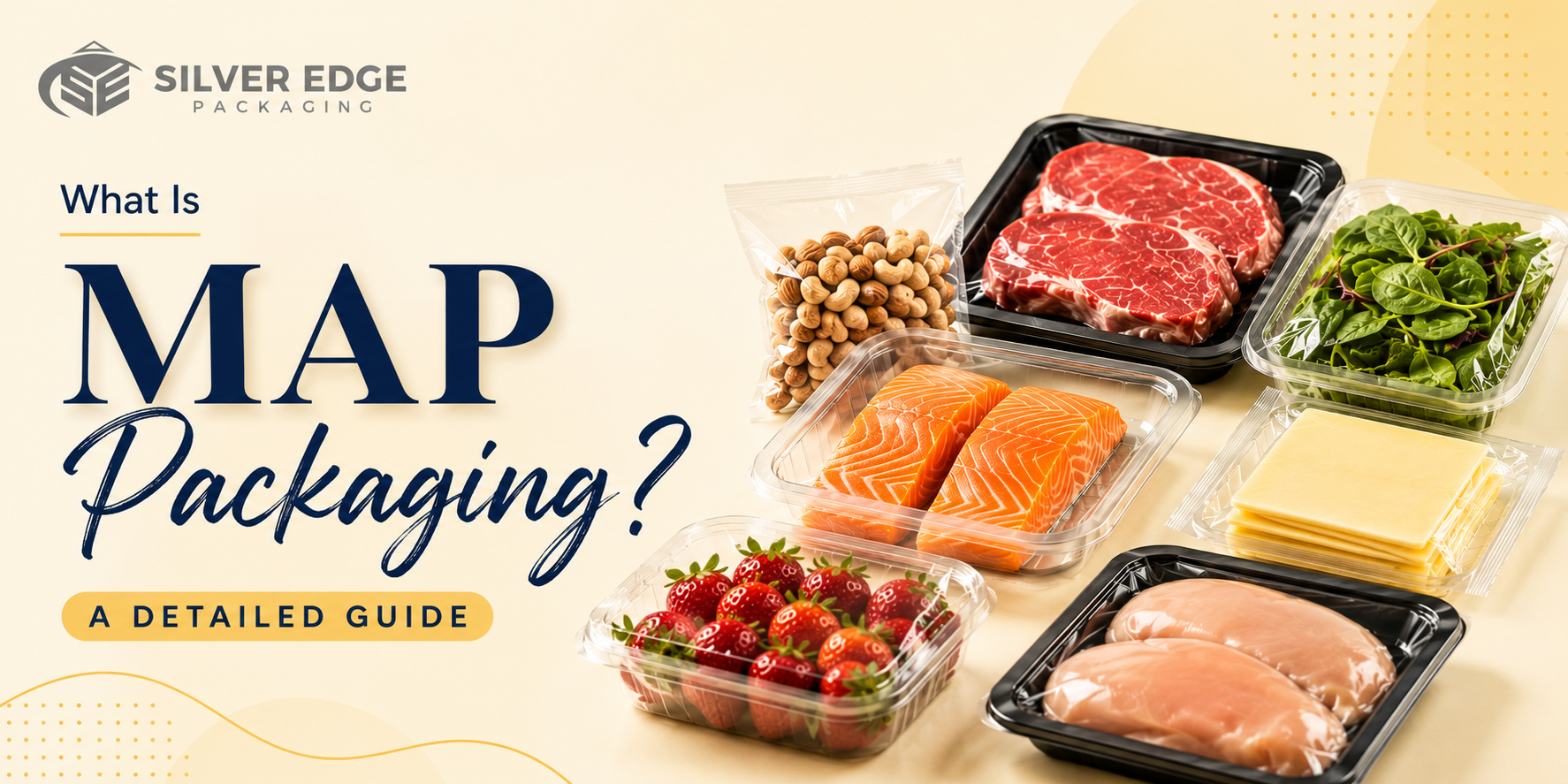
You can find MAP packaging anywhere; look at the tray of chicken that stays fresh for days. The bag of salad that does not wilt, the sliced cheese that lasts weeks. That is not luck; it is Modified Atmosphere Packaging, an important and emerging food packaging method. While most shoppers have never heard of it, food brands often use it.
Why? At Silver Edge Packaging, brands often ask us what MAP packaging is and how it really works. So, let’s discover MAP packaging in detail.
What MAP Packaging Actually Is?
MAP stands for Modified Atmosphere Packaging. It is a method of sealing food. This packaging replaces ordinary air with a gas mixture before sealing.
As we know, air makes food spoil faster, mostly because of the oxygen in it. By changing the gas inside the pack, the food stays fresh, safe, and good-looking for longer. This is all without adding any preservatives.
Typically, air is a mixture of 21% oxygen, 78% nitrogen, and a small amount of carbon dioxide. In MAP, the percentage levels of these gases are precisely adjusted according to the needs of the products. In other words, MAP simply changes the air around your food to help it last.
The Three Gases: The Base Of The MAP
MAP uses three food-safe gases, including:
- Nitrogen
- Carbon Dioxide
- Oxygen
Here’s the explanation.
Carbon dioxide is really good at helping to reduce the growth of microbes. The amount of oxygen is often kept low to stop food from getting oxidized and going bad, especially when we are talking about meat. And MAP uses nitrogen to fill up the space and push the oxygen out, which helps keep the package from getting crushed.
The way this packaging balances these gases is based on the type of food that we are storing in the package.
The Materials MAP Relies On
MAP only works if the pack can hold the gas mix inside and keep air out. This is the job of what the industry calls “barrier” materials.
Most MAP packaging is built from:
- Polyester or PE, which is really strong and clear.
- PE, or polyethylene, is the layer that seals products.
- PP (Polypropylene), which can handle high heat.
- EVOH: the star barrier layer, excellent at blocking gases, tucked in the middle.
- Aluminum or metalized layers: used when the highest barrier is needed, or to block light as well as air.
How Modified Atmosphere Packaging Works
The process starts with gas flushing. This means we fill the package with a mix of gases, carbon dioxide, nitrogen, and sometimes oxygen. The package is then sealed away once the right atmosphere is inside. This traps the gas mixture, creating an environment.
Modified Atmosphere Packaging also relies on the packaging materials above to allow gas to pass through. For example, fresh spinach or mushrooms release moisture. This means that the packaging needs to allow some gas exchange. This helps prevent decay caused by trapped moisture.
The Main MAP Pack Styles
The right style format for you depends on the product you are selling, the budget you have, and the brand you are building.
These are the common MAP styles you will see around.
Tray-Sealed
This is one of the most common MAP formats used to preserve meat, poultry, seafood, and ready meals. The food product is placed in a rigid or semi-rigid tray, and a sealing film is applied over it. Gas is flushed into the tray before sealing. Tray-sealed MAP offers good protection and is ideal for retail displays.
Bags and Pouches
Flexible bags and pouches are widely used for baked goods, produce, and snacks. These formats are easier to store and transport within the food supply chain management. The packaging film is often selectively permeable, which helps maintain the internal gas balance over time, especially for fresh-cut fruits and vegetables.
Bulk Food Packaging Storage
MAP is also used for bulk storage and transport of food items like shredded cheese, nuts, and processed meats. These formats often use heavy-duty films and high-capacity flushing systems.
Active & Passive MAP
- Active MAP: Gases are actively flushed in and sealed. This method is faster and more accurate and is typically used in automated lines.
- Passive MAP: The product’s natural respiration, combined with the film’s permeability, gradually creates the desired atmosphere. It’s slower and used for certain fresh produce.
Choosing the right MAP format depends on the food type, shelf life goals, and handling requirements. The table below will help you make a better choice.
| MAP Format | Typical Use Cases | Cost Level | Shelf Life Impact |
| Tray-Sealed | Meat, poultry, seafood, ready meals | Medium to High | High (excellent gas control) |
| Bags and Pouches | Baked goods, snacks, fresh produce | Low to Medium | Moderate to High (depends on film quality) |
| Bulk Packaging | Shredded cheese, processed meats, dry items | High (initial setup) | High (for transport and storage) |
| Active MAP | Automated production lines for perishable goods | Medium to High | High (precise gas flushing) |
| Passive MAP | Fresh-cut vegetables, some fruits | Low | Low to Moderate (slower adjustment period) |
The Core Benefits Of Switching To Modified Atmosphere Packaging
Why invest in MAP packaging? Well, this packaging offers tremendous benefits for your business.
Let’s have a look at its core benefits.
Extended Shelf Life
MAP provides a longer shelf life with less waste, up to 1.3 billion tons for food items.
It is genuinely useful because it keeps food fresh and cuts waste.
A study reported that strawberries were tested by being stored in 5% O2 and 15% CO2. They lasted up to 14 days without loss of quality. This is compared to 4 to 5 days under normal atmospheric conditions.
In another research, MAP packaged meat products with high CO2 concentration show up to 40 to 60% longer shelf life as compared to conventional packaging.
And all the data links straight to sustainability. MAP helped prevent 1.3 billion tons of food waste each year. This packaging also reduces greenhouse gas emissions related to food spoilage.
MAP Protects The Shape And Presentation Of The Food
Shoppers buy with their eyes first. Food freshness is also about appearance. According to packaging experts, MAP maintains the shape and presentation of products, especially for bakery goods and fresh products. Plus, this packaging protects vibrant colors in fruits and vegetables. The bright red hue of meat and the gloss finish of baked goods are also better maintained.
- Ir Delivers Chemical-Free Food: With MAP, food products have no chemicals in them; these clean-label food products are great for health-conscious people.
- Reduces Food Wastage: Thanks to MAP, less food is spoiled. This helps to cut down on waste and expenses.
- Transportation Friendly: MAP packaging helps keep food stable when shipping it to other countries. This makes Modified Atmospheric Packaging great not only for buying and selling food worldwide, but it also works well for delivering food.
The Applications of Modified Atmosphere Packaging
Many different food groups can benefit from modified atmospheric packaging.
For example, MAP is used to package meats, fruits, and vegetables, as well as other consumable goods like pharmaceuticals. Cheese, fresh pasta, ready meals, and seafood can also benefit from this packaging.
Additionally, Modified Atmosphere Packaging can be applied to other packaged goods such as coffee beans. Coffee beans release Carbon Dioxide when they are roasted, and without MAP, the beans must cool completely before being packaged, or the buildup of CO2 can cause the packaging to burst.
What Brands Should Think About Before Choosing MAP
If your brand is considering MAP, these are the questions that actually matter most:
- What is your food product, and how long must it last? This sets the barrier level and the required gas mix.
- What machine will seal it? The MAP pack has to match the equipment.
- What style of packaging works for your product and shelf? Is it a tray-sealed, pouch, bag, or wrap?
Moreover, the volume of your product also plays a role. This affects how much it costs per unit and which type of packaging makes sense.
The Takeaway
Modified Atmosphere Packaging helps your food stay fresh longer by replacing the air with a gas mixture. This way, the food can stay edible for a long time. For example, it can help strawberries last as long, and fresh meat can last 40 to 60 percent longer.
For the food industry, the important thing to know is that Modified Atmosphere Packaging is not something you wrap your food in. It is more about extending shelf life, protecting the food’s shape and presentation, being chemical-free, and reducing food waste.
If you want to learn more about MAP packaging, reach out to Silver Edge Packaging; we can guide you further.