Skip to content






What if your product is also placed on the shelf just like all others, but suddenly a customer notices some extra light on a box? They came and started seeing this; they also felt something raised or engraved on the surface of the box, leading them to the decision of purchasing it. It can be your product box, and you can easily turn that curious customer into a loyal one through embossing and debossing.
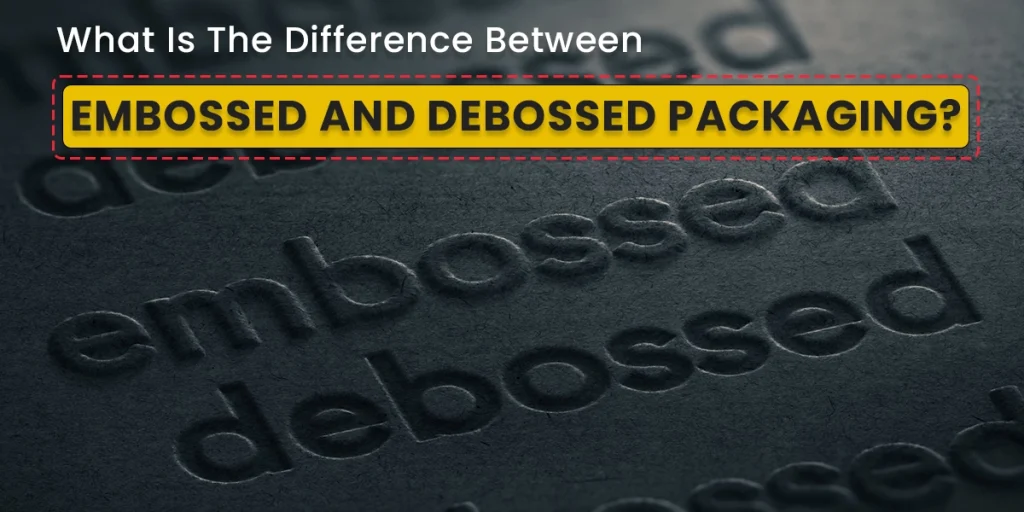
The world of customized packaging has been revolutionized by these two techniques of embossing and debossing, adding the most premium touches to your packs. Embossing elevates design elements, creating a raised, tactile effect above the material’s surface, while debossing creates an indented, sunken impression below it. You can perceive it as two sides of the same coin, of which you can decide according to your brand presence, customer psychology, and market demands. Let’s discuss the technical and creative features of these methods to help you make an informed decision for your next project.
What is Embossing?
A printing finishing technique that can create a raised 3D image or design on your box is known as embossing.
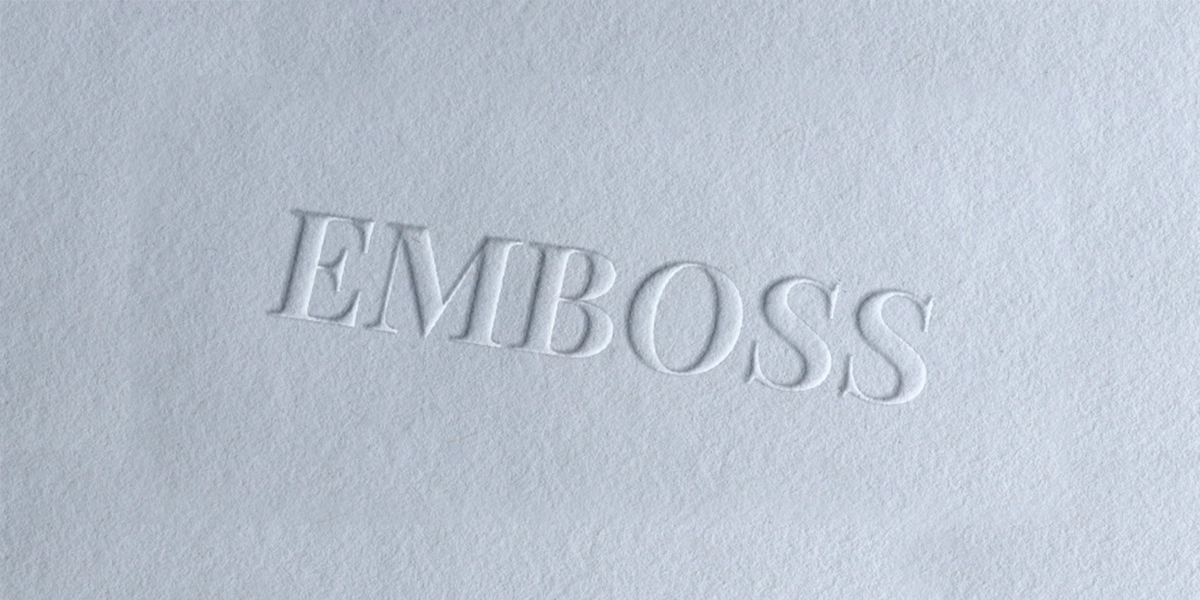
The use of a metal die and a counter-die presses the material from underneath, which pushes the design upward toward your viewer. This process creates a structural change in the paper fibers that causes permanent elevation. You can make your box design both visible and tactile, while naturally interacting with flashy light, adding more charisma to your packaging.
Key Usage:
- Commonly used on wine, spirits, luxury cosmetics, and premium chocolate boxes to give them a more elegant and high-end look.
- Often applied to logos, brand names, and design elements, so they stand out with a raised, touchable effect.
- Can be used to highlight important product details, making key information easier to notice at a glance.
- Added to certificates and official documents as a security feature to help confirm they are original.
- Used in retail packaging to create frames or borders around product windows, helping draw customers’ attention.
What Is Debossing?
You can easily understand the concept of debossing, as the opposite of embossing. You can create a depressed or recessed image by pressing a die into the front side of the material.
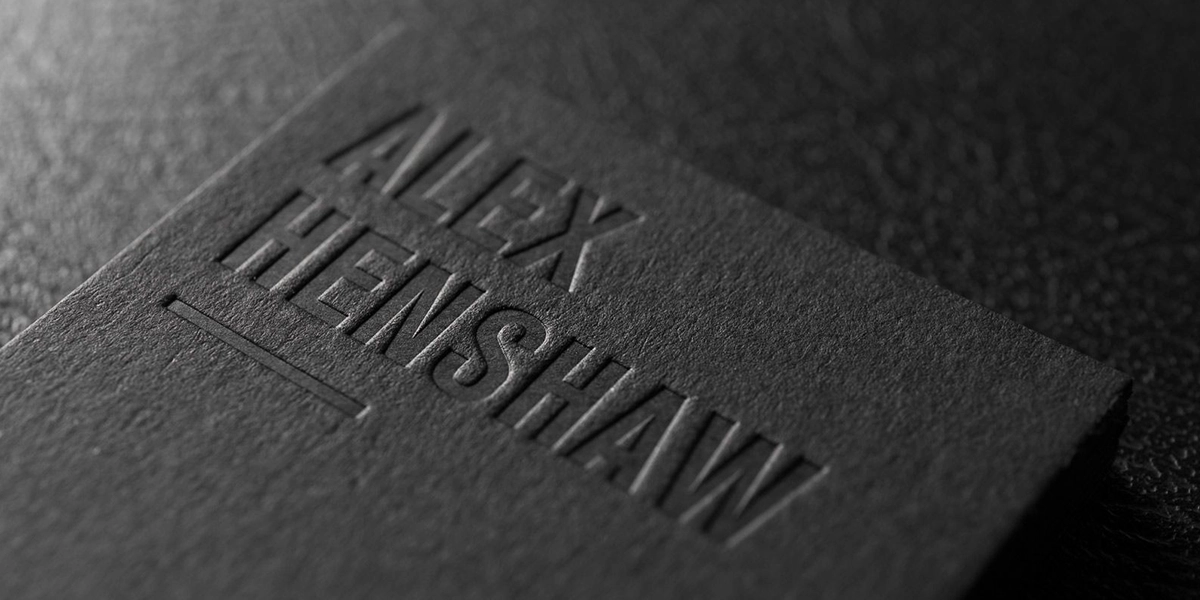
It results in an indented design on your box that sits below the surface of the paper or cardboard. It offers a sophisticated “stamped” or “engraved” look that pulls the customer’s eye into your design by creating a sense of unique depth.
Key Usage:
- Commonly used in modern and minimalist designs, where a soft, pressed-in look feels clean and elegant.
- Often seen on stationery, wedding invitations, and luxury tech packaging to create a simple yet premium style.
- Used in the fashion industry on leather patches and thick hang tags for a more refined finish.
- A popular choice for eco-friendly packaging, especially on recycled kraft paper.
- Used to create textured backgrounds, like wood grain or linen patterns, to add depth to packaging.
- Also used in inner packaging parts, such as inserts, to give a more polished unboxing experience.
Types of Embossing
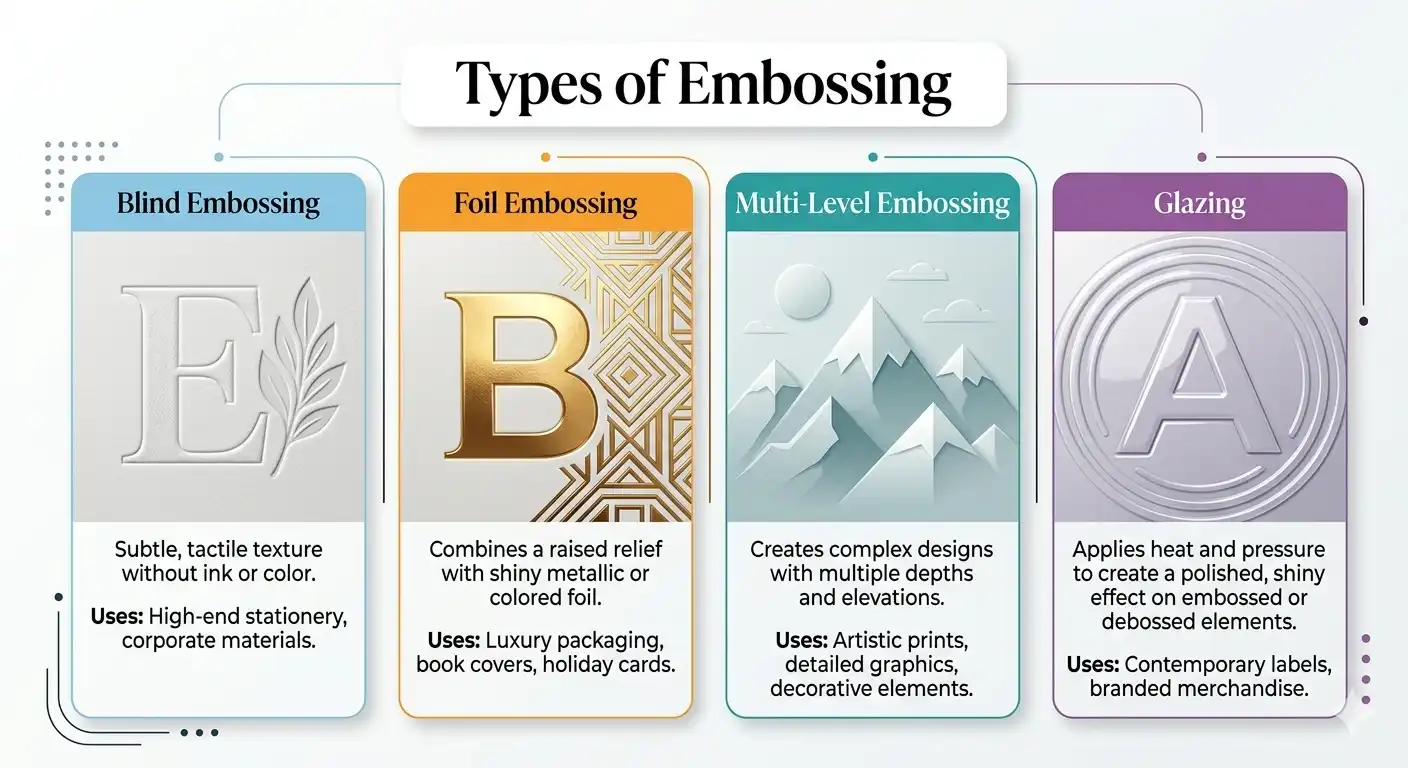
When you have to select an embossing style, you are not confined to a limited or single flat lift. This technique has multiple types to create an artistic view that meets all of your requirements:
- Bind embossing: You can get this type of embossing for the purest form of the craft that needs no ink or foil. This technique entirely relies on natural shadows and highlights to create the particular raised area. It is perfect for you if you want an elegant or understated look.
- Foil embossing: The metallic or colored foiled layer is applied simultaneously with the elevation in foil embossing. You can utilize this gold standard technique to make an elite packaging with a combination of 3D texture and sparkled gold, silver, or holographic foils.
- Multi-Level Embossing: If you want to have intricate designs with different heights, like a mountain range where some peaks are higher than others, you can get Multi-Level Embossing. It involves complex dies that can add a sculptural quality to your packaging that is impossible to ignore.
- Glazing: You can make the lifted areas shinier by applying extra heat and pressure during the embossing process. This polished finishing is glazing that is highly effective for darker paper stocks.
Types of Debossing
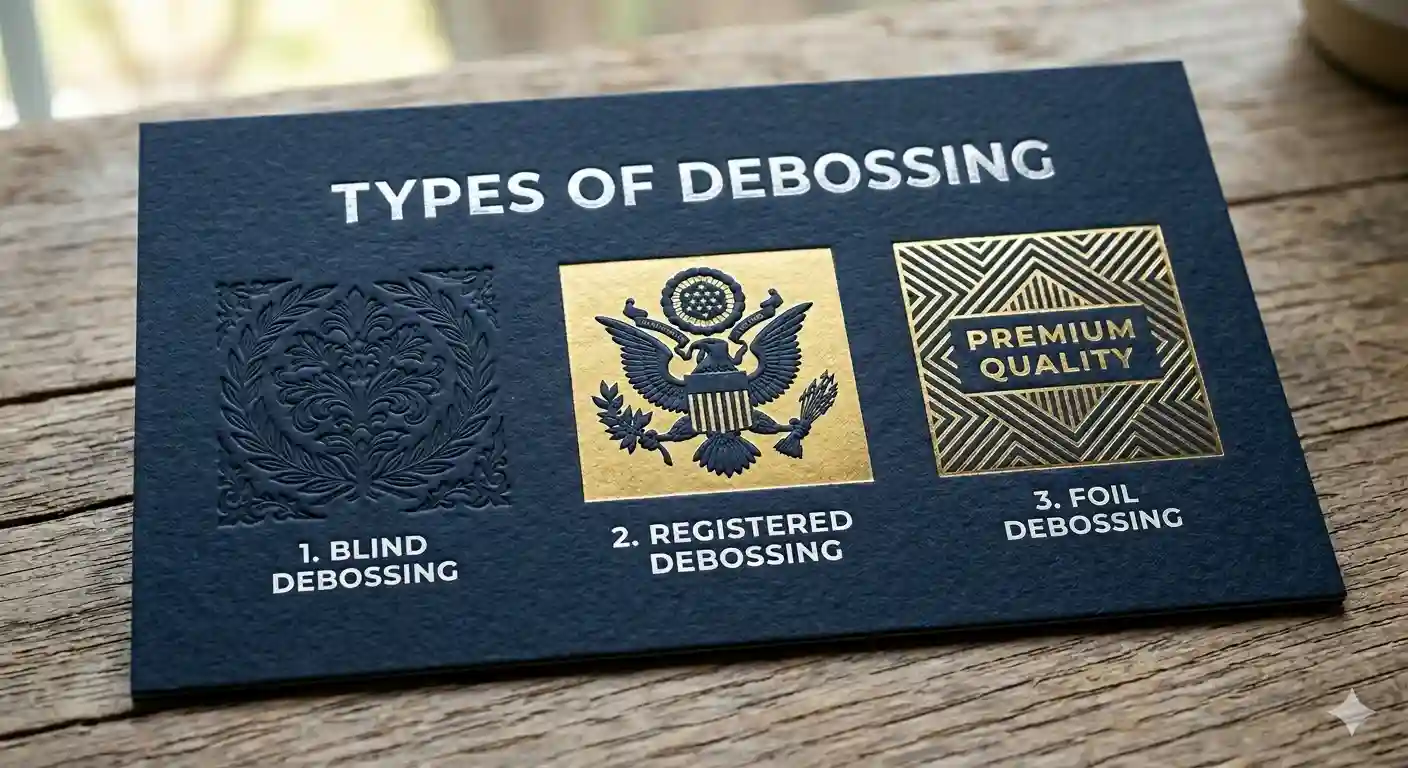
Debossing also has different types that create specialized finishes that may match different brand identities with different business models. You can choose the one that closely resembles the needs of your customer.
- Blind Debossing: Just like embossing, blind embossing does not use any ink. You can get a deep and clean indentation in your customized box that looks like a customized seal. It can highly favor you if you are dealing with tech packaging and organic skincare brands.
- Registered Debossing: This technique can provide you with an engraved design that perfectly aligns with your pre-printed image. The debossing over a printed logo can add a layer of physical depth to the visual color. It can make your brand name feel locked into the material.
- Color-Fill or Foil Debossing: This process is marked by filling the recessed area with ink or a layer of foil. It gets protected from scratches and scuffs as it is sunken into the paper. It is ideal for products that will be handled frequently.
Embossing vs Debossing: Key Comparison
| Feature | Embossing | Debossing |
|---|---|---|
| Design Effect | Raised (3D upward impression) | Indented (pressed into the surface) |
| Visual Impact | Strong, attention-grabbing, high visibility | Subtle, minimal, elegant appearance |
| Tactile Experience | Noticeably raised, easy to feel | Softly recessed, smooth depth feel |
| Brand Impression | Premium, bold, luxury-focused branding | Sophisticated, modern, understated luxury |
| Best For | Logos, luxury packaging, retail shelf impact | Minimalist branding, eco-friendly packaging, stationery |
| Material Suitability | Works best on flexible, medium-weight stocks | Works best on thick, dense, and textured materials |
| Cost | Generally higher (requires two dies) | Usually lower (requires one die) |
| Durability | Long-lasting but raised edges may wear slightly over time | Very durable as the design is pressed into the material |
| Printing Compatibility | Pairs well with foil, UV, and coatings | Pairs well with ink fill and textured finishes |
| Customer Perception | Eye-catching and premium at first glance | Refined, artistic, and subtle sophistication |
Benefits of Embossing
Embossing is not just a decorative technique; it is also a powerful branding tool that helps products stand out and feel more premium.
Key Benefits:
- Creates a strong visual impact as raised designs naturally catch light and attention.
- Helps products stand out on shelves in a crowded retail environment.
- Giving customers a satisfying feel when they touch the packaging.
- Encourages better brand recall through memorable 3D design effects.
- Allows for high-detail designs, including fine lines, patterns, and security elements, using precision dies.
- Works well with premium finishing options like Spot UV or soft-touch lamination for a richer experience.
- Can support sustainability goals by reducing the need for heavy ink-based decoration in some designs.
Benefits of Debossing
Debossing creates a pressed-in design that feels subtle, elegant, and closely connected to modern luxury packaging styles.
Key Benefits:
- Gives a refined and subtle look, perfect for clean and minimal designs.
- Creates a strong physical experience, making the packaging feel more personal and engaging.
- Offers good durability, as recessed designs are less likely to get damaged during shipping and handling
- Works especially well on thick, pulpy, and kraft materials, maintaining the natural texture of the packaging
- Supports eco-friendly packaging, as it often requires no ink, coating, or extra finishing
- Ideal for artisan, handmade, and premium natural products, giving them a more authentic and established feel.
How Embossing and Debossing Work?
Process of Embossing
The technical process of embossing stars involves creating a Die set. This consists of two pieces: a female die, which has the design etched into it, and a male counter-die, which is a raised version of that same design. Whatever material you use, whether it is a luxury paper, metallic cardstock, or eco-friendly kraft, it can be fed into a specialized press that is positioned precisely between these two plates.
After the alignment, the press exerts a combination of pressure and heat with severity. The intense force physically stretches the fibers of the material, molding them into the shape of the die. The heat is the primary component here, ensuring the lifted effect does not flatten over time.
Process of Debossing
The debossing also follows a similar mechanical pattern requiring a different configuration. A Single Female Die is required in most of the cases. This die is mounted to the top of the press. The material is placed on a flat, hard surface, and the die is pressed directly into the front of the stock. As there is no other die that can push from the back, the back side of the paper remains relatively smooth and flat.
This technique requires more pressure than debossing, as it has to compress the material rather than just stretching it. You can use thicker substrates like 24pt or 32pt cardstock to create a maximum impact. The use of fewer dies makes this process more repeatable with cost effectiveness, helping you to achieve a deluxe look for large-scale productions.
Advanced Techniques
Key Embossing Techniques
You need to know about the different variations in embossing to get the best of the design for the final look of your product box:
- Tint Leaf Embossing: It uses a clear foil that makes the raised area shine without changing the color. It is perfect for a “wet” or “glossy” look.
- Combo Embossing: It is a high-level technique that dies both prints (with ink or foil) and embosses in a single pass. You can ensure a 100 percent perfect combination between the color and texture.
- Pastel Embossing: This technique is used to create a soft and velvety feel on the raised design that can mostly be noticed in high-end skincare packaging.
Key Debossing Techniques
There are certain tips and tricks in the method of debossing that can get you different debossing results from the same packs:
- Burnishing: In this dimension, the debossed area is slightly darkened with the help of a higher temperature. It can deliver exceptionally beautiful results on natural and light-colored papers, as well as on wood-based materials, creating a branded look similar to a hot iron on leather.
- Inking: This variation involves applying a thin layer of ink on the recessed design. It leaves a richness and depth that can never be achieved by surface printing.
- Scored Debossing: It uses thin, sharp dies to create deep lines or borders that can provide a sense of structure or a frame around other design elements.
Die Types and Styles of Embossing/Debossing
The designing process of embossing and debossing solely relies on the “die”. A metal plate, usually made up of magnesium, copper, or brass, that has artwork etched on it. The complexity of design and the length of your production run decide the choice of metal.
- Magnesium Dies: These are the most common and cost-effective dies. They are “photo-etched” and are perfect for short to medium runs. They are softer than other metals and can corrode over time, but they can hold the good details.
- Copper Dies: In metals, copper is tougher and holds heat better than magnesium. It is a preferred choice for medium to long runs when consistent detail is required over tens of thousands of units.
- Brass Dies: Brass dies are the gold standard of the industry. These are CNC-machined rather than etched, allowing for multi-level designs with sculptures. These are incredibly durable and can last for over a million impressions, making them resist degradation.
Embossed Paper and Debossed Paper Styles
The selection of base material is equally important as the technique. The embossing uses thinner stocks or long fibers as they can be stretched without tearing or cracking. If the paper is too brittle, the raised edges may lose their crispness. The use of premium cardstocks is recommended to ensure a round and smooth finish.
In debossing, the thicker the material is, the better the deboss you can achieve. You need a lofty material for satisfying indentation, just like a pillow that holds a shape when you press into it. The perfect packaging materials for debossing include cotton-based papers, double-thick cover stocks, and heavy felt textures. These materials allow the die to soak deep into the fibers, creating a luxurious feel that customers will notice the moment they pick up the product.
Final Words
Your decision of choosing between embossing and debossing is purely a technical decision, based on how you want your brand to be felt. These techniques are capable of transforming your standard custom boxes for products into customized art pieces. At Silver Edge Technology, we ensure unique and affordable packaging through high-quality materials and skilled expertise.
The future of packaging lies in a tactile and consumer-friendly experience, along with sustainability. You can use these techniques to design a strategy for rewardable packaging in the form of a better customer experience and more sales.