Skip to content







Packaging serves as a safe storage solution for various products, including food items, baked goods, apparel, cosmetics, and other retail items. With advancements in the packaging industry, packaging companies manufacture various types of packaging tailored to the protection needs of products. In this case, glassine bags are highly important as moisture and grease-resistant packaging options.
These bags are used to pack various types of food items made with pure cellulose fiber, providing full protection and aesthetic appeal simultaneously. In this article, we will learn about what glassine is and provide a detailed overview of glassine bags, helping you choose the right one for your products.
What is Glassine?
Definition of glassine: The smooth and gloss-coated paper with excellent moisture and grease resistant that provides safe storage for food items and also enhances customer experience. Glassine paper has excellent potential to protect art, food, photographs, and other retail items from water, dust, moisture, and other forms of damage. We use glassine in our daily life as:
- Glassine Merchandise Bags
- Bakery and Snack Bags
- Archive paper
- Tracing Paper
- Bag or Paper for Art Protection
- Retail Products and Apparel Items Bags
- Pouches for Pharmaceutical Products
- And More
How is Glassine Paper Made?
Here is the step-by-step guide for the manufacturing process of Glassine paper, along with an explanation of how it differs from other papers, translated into English as requested:
Pulping
Wood is chipped and cooked to separate cellulose fibers from lignin. Complete removal of lignin is ensured to produce pure pulp for glassine paper. This makes the pulp cleaner and more flexible compared to ordinary paper pulp.
Sheet Formation
The clear pulp is bleached and then suspended in water. This pulp slurry is spread onto a wire mesh, where water drains out, and the cellulose fibers mat together to form sheets. These sheets are then sent to the drying stage.
Dressing and Drying
After initial drying, the paper sheets still contain some moisture, which is removed by pressing the sheets under pressure. This step makes the sheets straighter and prepares them for the final finishing processes.
Supercalendering
The dried sheets are passed through a series of heated and cooled pressurized rollers called supercalenders. This process smooths and compresses the paper fibers, giving glassine its characteristic glossy finish, translucent appearance, and enhanced density. The supercalendering breaks down fiber capillaries at the cellular level, reducing porosity and making the paper resistant to air, water, and grease.
Uses of Glassine Paper Bags
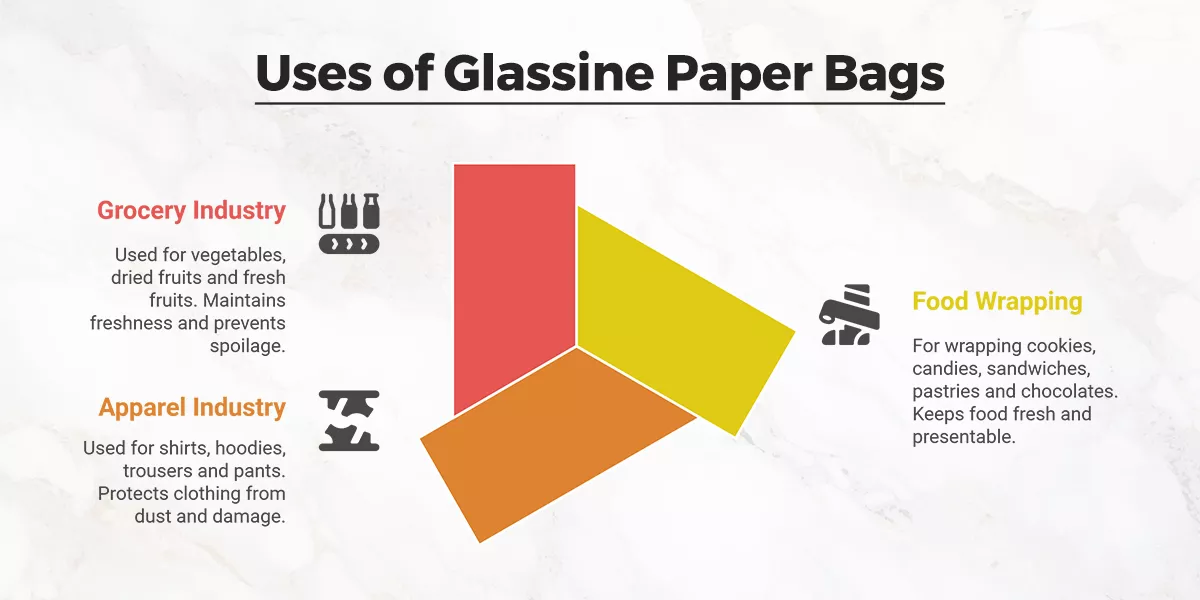
Due to their versatile features, including moisture-resistant, water-resistant, and grease-resistant properties, glassine paper bags are used in various industries to maintain the quality of products.
Food Wrapping
Glassine paper bags are used to wrap a variety of delicious food items, including cookies, candies, chocolates, sandwiches, pastries, and other baked goods. These bags prevent the contamination of food items and also prevent messy surroundings during takeout or consumption. Glassine sleeves are used to pack sandwiches, helping customers keep their hands safe from grease.
Apparel Industry
Personalized glassine bags are used to pack various apparel items, such as shirts, hoodies, trousers, pants, and other fashionable clothing, to help customers easily carry their purchases with your brand message. These bags not only keep your products safe, but also ensure convenience and spread your brand story.
Grocery Industry
Glassine packaging is also ideal for packaging a wide range of items, including vegetables, dried fruits, and fresh fruits. These bags keep them fresh and safe from dust and other external harmful factors while being transported and stored.
Apart from this, glassine envelopes and bags are used to pack various retail items, such as stationery, snacks, and confectioneries, with desired protection. Additionally, glassine bags for artwork are highly important in the art industry due to their durability and affordability.
Different Sizes of Glassine Paper Bags
Glassine paper rolls are used to die-cut glassine bags in various sizes according to the application, helping brands enhance their customers’ experience
Here are some commonly used sizes of glassine packaging:
Sizes in Inches
Glassine Envelopes 5×7 Inches
Sizes in millimeters (mm)
- 65 x 65 mm mini glassine wax paper bags
- 92 x 68 mm tinny glassine bags
- 92 x 92 mm small glassine bags
- 160 x 65 mm
- 220 x 310 mm medium glassine bag
- 250 x 350 mm
- 350 x 450 mm Large glassine bag
After learning about glassine bags, their uses, and sizes, let’s take a deep dive into glassine paper design and printing capacity.
Design and Printing Capacity of Glassine Paper
With the help of rotogravure, flexographic, digital, and offset printing, various brands print custom glassine paper featuring the desired graphics and colors chosen by their customers. With the help of these printing methods, brands can get these paper in various colors and types, such as:
- Kraft Glassine Paper / Brown Glassine Paper
- Colored Glassine Paper
- Black Glassine Paper
- White
- And other
Coloured glassine papers are also designed with various graphics and brand logos to help brands effectively convey their message. You can use these premium-quality glassine papers to manufacture glassine baggies. By interleaving paper, packaging companies give them a personalized look.
Is Glassine Paper Biodegradable and Eco-Friendly?
Yes, glassine paper is made with wood pulp that can biodegrade naturally, and you can confidently say that glassine paper is also eco-friendly. We hope that now, I have resolved your doubt: is glassine paper compostable or recyclable, and you can use it to create eco-friendly glassine packaging for your products.
Where can you purchase Glassine Paper Bags?
If you are looking for a place where you can purchase custom glassine paper bags, you are in the right place. Silver Edge Packaging can meet your packaging needs at affordable rates and with a personalized touch, helping brands save money while delivering the best quality. We offer free shipping and fast turnaround time worldwide. You can contact us to order your dream packaging or for any consultation about packaging.
Conclusion
Glassine papers and glassine bags both have great importance in various industries because of their durable and food-grade nature. Glassine paper bags provide complete protection to food items and also enhance the customers’ experience by maintaining hygiene. We hope this article can help you understand which paper is more suitable for your wrapping products or the packaging of products. If you need custom product packaging or glassine bags with your brand logo, contact us now!
FAQs
Is glassine paper the same as parchment paper?
Here is the difference between glassine and parchment paper. Glassine and parchment paper are not the same, but they are used in the food industry for wrapping various food items to keep them safe and preserve their taste. Glassine is a glossy, moisture-resistant, and grease-resistant paper, whereas parchment paper is coated with silicon and used to wrap baked items. It is non-stick and heat-resistant.
Can water be packed in glassine?
Let’s clear the doubt, is glassine is waterproof. No, we cannot pack water in glassine bags because glassine paper is water-resistant, not waterproof.
Is glassine eco-friendly?
Yes, glassine is an eco-friendly packaging option.
What do you use glassine paper for?
We can use glassine paper for wrapping food, artworks, and other retail items.
Is glassine paper safe?
Glassine paper is safe for food packaging and also helps keep the Earth safe from waste and pollution.
What are the disadvantages of glassine paper?
This paper is less durable and less effective for printing and embossing.
Is glassine better than plastic?
Yes, glass is a better packaging option than plastic, providing safe storage for food items and preventing any chemical impact on the environment.
What is a good substitute for glassine paper?
There are various substitutes for glassine paper that you can choose from, depending on your application, including parchment paper, cellophane, tracing paper, and vellum.
What is the difference between glassine paper and silicone paper?
Glassine paper is well-known for its moisture- and grease-resistant properties. This paper is an excellent option for packing food items. On the other hand, silicone paper is applied with a silicone coating and is well-known as baking paper or parchment paper. This paper is also food-grade, heat-resistant, and non-stick.