Skip to content







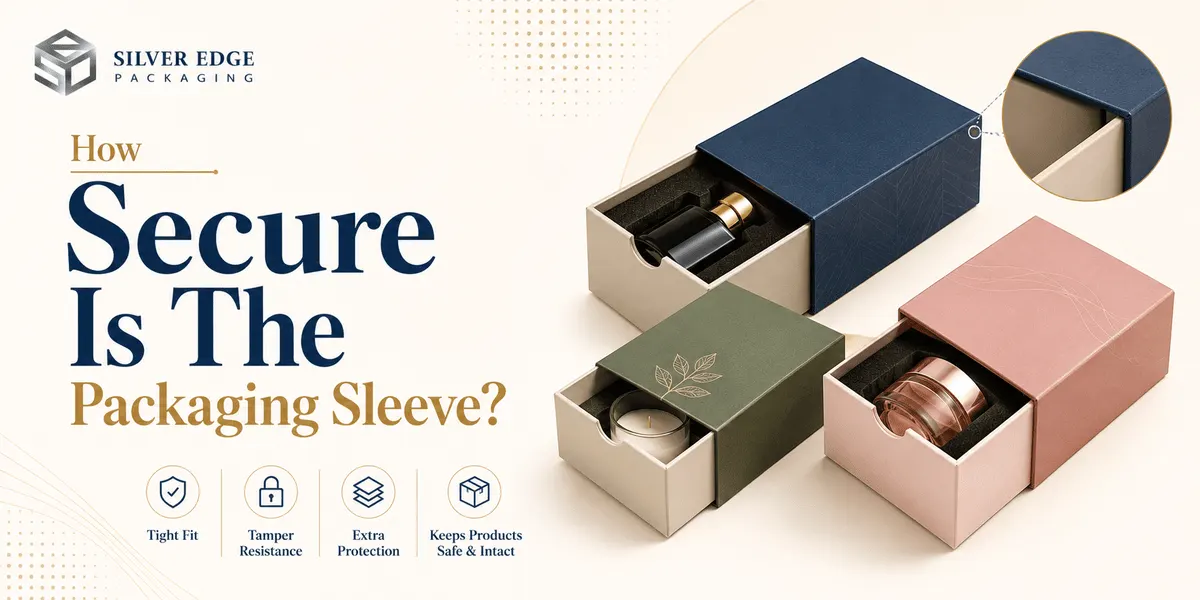
A packaging sleeve is a printed band of paperboard or cardstock that wraps around a product or its box. In case you still wonder what it is, imagine sliding it off a candle, a soap bar, or a boxed gift before the actual product appears. A carton sleeve carries the branding, product information, and shelf appeal on a strip of board. Light, lean, and printable, that is why it has become one of packaging’s popular layers.
Which raises a question before you trust your product to one: How secure is a packaging sleeve, actually? Well, we know that sleeve guards the product’s or a box’s surface, stiffens the structure, and can show whether a package has been opened or not. But let’s break down the kinds of security a sleeve offers.
What “Secure” Even Means for a Sleeve?
“Secure” gets used in packaging a lot, but for a sleeve, it actually splits into three jobs:
- Physical protection: Keeps your product safe from scratches, dust, moisture, and knocks during transit.
- Structural security: Protects the package itself from crushing or sliding open.
- Tamper security: Proves to the customer that nobody opened the product before they did.
Moreover, we also need to place the sleeve in the packaging hierarchy. A sleeve is a packaging wrapped around a container, such as a box, jar, or bottle. It does not touch your product directly. Your box design carries the protective load, and the sleeve adds a supporting layer on top. This explains every strength and limitation of how secure a packaging sleeve is.
Physical Protection
When it comes to physical protection, a sleeve packaging genuinely earns its place, as long as you understand precisely what kind of protection it offers.
Wrapped around a box, a sleeve takes the wear and tear your product would otherwise absorb. It shields your box’s surface from scratches, scuffs, fingerprints, and dust on the shelf and in the shipping carton. For a printed or laminated box, that barrier is the difference between your product arriving new and arriving scuffed.
Structural Security
The second kind of security is structural. A packaging sleeve does more than people expect.
- Reinforcement: A sleeve is cut from a sturdy material like cardstock, paperboard, or kraft and wraps the package like a belt. The heavier the stock, the more protection it contributes. For example, a sleeve in 16 pt or cardstock adds rigidity around the box’s midsection. It helps resist crushing when it’s stacked or squeezed against parcels.
- Containment: It also holds the package together. Wrapped around a box, the sleeve keeps the lid in place. It stops the package from sliding open in transit.
Tamper Security
Tamper security is one of the important things a brand can offer to its customers. It gives customers proof that the product they get is the same as when it left the place where it was made. When customers see a seal or a torn piece of tape, they know right away if something is wrong.
A paper sleeve is really good at doing this. The way it is wrapped like a ring that you have to take off before you can get to the product makes it perfect for showing if someone has tried to open it.
The Features That Make a Sleeve Tamper Evident
There are 3 ways a sleeve can be made to indicate whether your product has been opened.
- Perforated Tear Strips: A perforation is like the line on product packaging. On a sleeve, this line goes across the band to open the package; the customer has to grip the strip and tear along it. If the strip is still intact, it means that the package is still sealed.
- Security Seals and Tapes: A security seal or tape is a strip that goes across the point where the sleeve closes. If someone peels off a security seal, it will leave a mark; this mark can be residue or a message that says “VOID”.
- Interlocking Tabs: An interlocking tab is a flap that is cut into the sleeve. It folds into a slot to lock the band. It is like the tab that holds a cereal box shut. To open the sleeve, the customer has to tear the tab. Once it is torn, it cannot be put back together.
- Pairing It for Full Protection: For products, a tamper-evident sleeve is all the protection that customers need. For some products, like over-the-counter medicines, brands mostly use the sleeve as a primary seal. Meaning? The sleeve provides evidence that the package has not been opened. The inner packaging handles the protection. Together, they create a package that customers can trust.
How to Choose the Right “Sleeve” Security for Your Product
If your goal is presentation with surface protection and a clean, branded shelf presence, a packaging sleeve is more than secure enough. Pair it with a primary box to cover the physical side completely. If your goal is proof of integrity for food, supplements, or cosmetics, add an engineered tamper-evident feature. A perforated strip or a security seal also works well.
If your goal is tamper resistance or impact protection for something fragile or breakable, the sleeve is a layer, not the solution.
Final Thoughts
So, how secure are packaging sleeves? Secure enough to reliably protect the surface from scratches, dust, and moisture. It reinforces the structure of a sound box against crushing and sliding open. What makes a sleeve so effective is that it provides surface protection, tamper evidence, and structural reinforcement brilliantly.
Understand what a sleeve does best, and you will get a finishing layer that protects, reinforces, and reassures your customers—all from a lean strip of board that punches well above its weight. Interested in getting custom sleeve packaging that protects and impresses? Brief the experts at Silver Edge Packaging on your requirements.