Skip to content







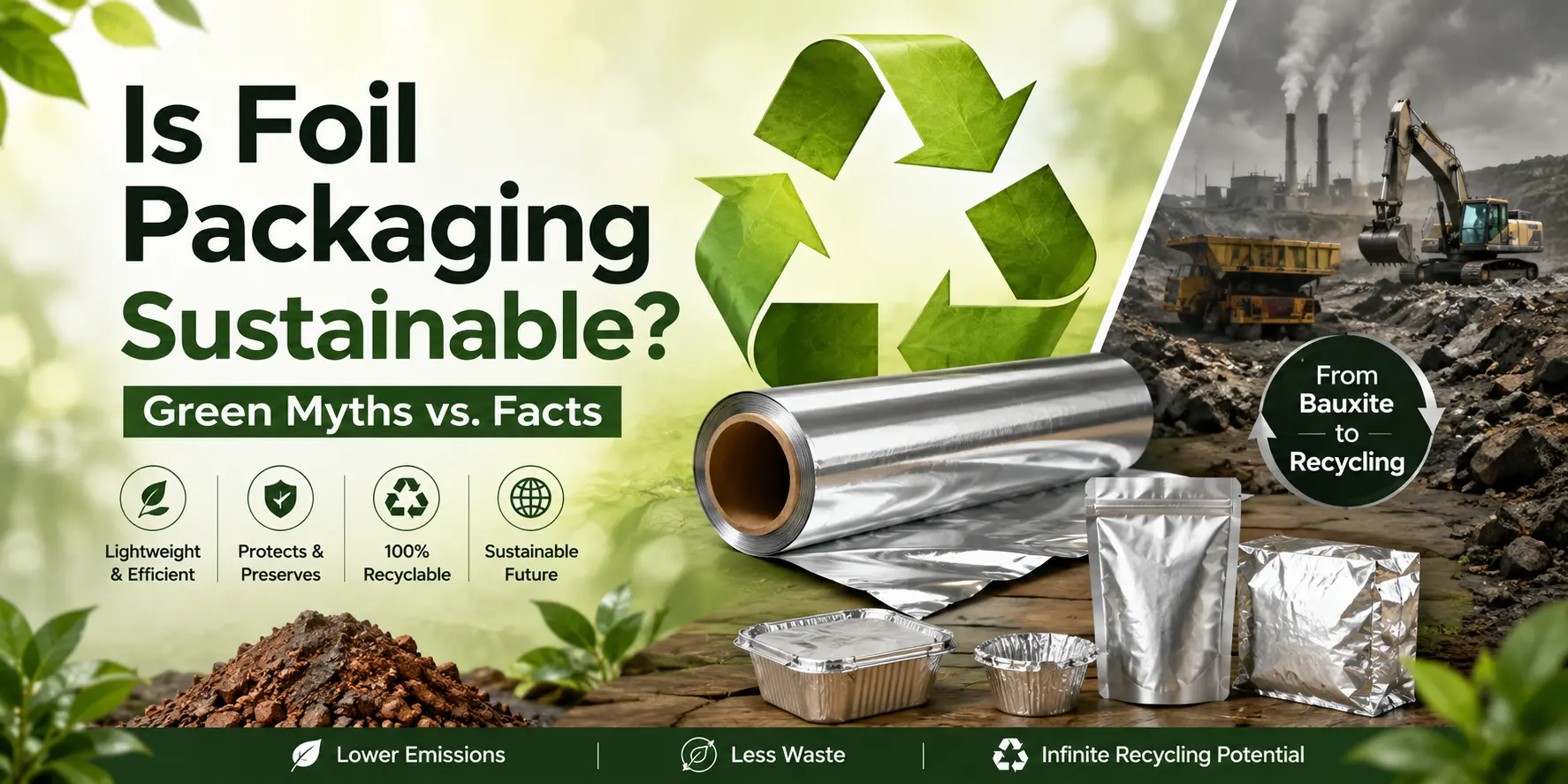
You might get confused when you think of the environmental impact caused by a correlation between the production of aluminum foil and its functions. Aluminum foil is manufactured under a heavy industrial process that may harm the planet, but on the other hand, this foil may protect and preserve the edible items.
There is a mystery behind foil packaging. You can easily observe that creating raw aluminum is definitely a tough and energy-consuming task on Earth, but once it gets into the supply chain, you can recycle it again and again. It is capable of protecting your products not at the cost of a genuine harm to the earth. You can study this interesting life cycle of foil packaging in this blog.
The Environmental Cost: Extraction and Production
To understand the true sustainability of any packaging material, we have to look at its entire lifecycle, starting at the very beginning. For aluminum foil, the beginning is a raw mineral ore called bauxite.
You can understand whether any packaging material is sustainable or not by looking at its entire life cycle. The snapshots or incomplete information may show you one side of the story. The beginning of aluminum foil production starts with the raw mineral ore known as bauxite.
The Impact of Bauxite Mining
You see aluminum as a shiny metal sheet, but it does not exist naturally in this form. You have to consider it from bauxite deposits that are primarily located in tropical regions. With the help of open-cast mining, this matter is extracted. You have to clear large areas of land in this process, which eventually disturbs the local ecosystems and causes harm to the natural habitats.
After that, you have to refine this ore that converts it into Alumina, a white powder that we can also call raw aluminum metal. This melting process takes place due to electricity and chemical reactions that release greenhouse gases. You can see this carbon footprint as the biggest environmental drawback of aluminum foil packaging.
The Lightweight Saving Grace
It is true that its metal has heavy footprints, but it also offers a major design advantage in the form of extreme lightweight. You can roll down this aluminum barrier foil to various microscopic thicknesses while maintaining its protective features.
Because the packaging is so thin and light, it takes significantly less fuel to transport foil-packaged goods across the country compared to shipping heavy glass jars or rigid plastic containers. This weight reduction drastically cuts down on transportation emissions, helping to offset the environmental cost of the initial mining phase.
You have to spend less on the transportation of foil package goods due to their thin and lightweight nature. It is highly beneficial as compared to the shipment via heavy glass jars or rigid plastic containers. It also reduces the transportation emissions, which stabilizes the environmental cost of the initial mining phase to some extent.
Reducing Global Product Waste
True sustainability isn’t just about what a package is made of. It is also about how well that package protects what is inside. Food waste and ruined products have a massive environmental cost of their own.
Maximizing Product Shelf Life
When food goes bad and gets thrown into a landfill, it rots and produces methane, a potent greenhouse gas. Furthermore, all the water, energy, and land used to grow that food are completely wasted.
Aluminum foil packaging acts as an absolute barrier against light, oxygen, and moisture. By sealing out these elements, foil extends the shelf life of food and medical products by months or even years. This preservation power prevents thousands of tons of product spoilage every year, making foil a crucial tool for resource optimization.
Outperforming Alternative Materials
When you compare foil to alternative packaging materials, its protective value becomes even clearer. Plastic wraps often let microscopic amounts of oxygen seep through over time, leading to quicker spoilage. Glass is an excellent barrier but is fragile and heavy to transport. Foil gives manufacturers a way to safely ship sensitive products to US consumers without needing refrigeration or chemical preservatives, creating a highly efficient distribution system.
Infinite Recycling vs. The Landfill Trap
Sustainability is marked by the state of the material after it is used. It is observed whether it can serve any function at this moment or not. At this step, aluminum completely outperforms plastic, but it requires proper handling by consumers after its use.
The Power of Infinite Recycling
One of the most unique things about Aluminum is that it can be recycled rapidly without any damage to its strength or purity. It does not degrade its quality like plastics. You can theoretically say that you can recycle a piece of foil forever. Moreover, you need only 5% of the mining energy to melt down the existing aluminum to make recycled foil. It results in 95% of energy savings, which is why recycling programs for aluminum are highly recommended.
The Multi-Layer Flexible Packaging Problem
Today, the foil’s stability is being challenged by the rise of multi-layer flexible pouches. These pouches have a fused layer of aluminum foil along with plastic. Its examples can be snack bags, pet foil food pouches, and drink containers. These materials get bonded for the lifetime and are not even separated by these standard sorting facilities. Such pouches can nowhere be put instead of trash. These mixed bags continue to end up in landfills, that affect the overall graph of sustainable foil packaging.