Skip to content






se type of insertsWhat if you have spent months making your product premium, then designing a beautiful box for it, but when your customer opens the box, they find a shattered or dented product inside it? It will simply make all of your efforts null and void, damaging your brand identity and losing a customer forever. You can avoid this situation by using the custom packaging with inserts.
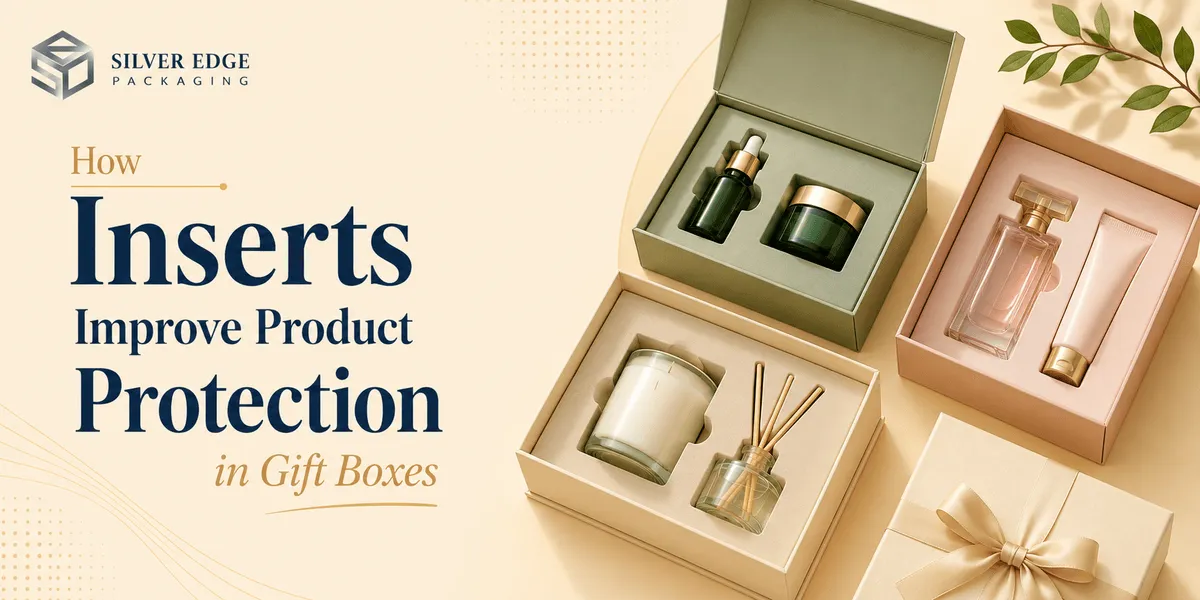
The insert is a custom-fitted material that you can place inside your box to secure or separate your products. The inserts not only enhance presentation, but they also provide structural support to the boxes. You can eliminate the internal space by using them, preventing your items from colliding. You can easily reduce your return rates by delivering your product safely and sound to the customer’s doorstep. Explore how you can make your delicate and premium gifting items more protected by using these inserts.
How Do Inserts Stop Damage?
You can understand the importance of the insert by knowing first what usually happens to the gift box during transportation. Your product can most probably be damaged due to three silent killers: movement, external shock, and collision of items. The inserts are particularly designed to face each of these three challenges.
1. Eliminating the Danger of Internal Movement
If your gift box has a space, your product may act as a pendulum. It puts your item at the highest risk of damage. Every time their delivery truck has sudden brakes, your product can slide against the walls. The custom insert can completely solve your problem by locking your product inside the box snugly. The product remains unable to gain any momentum, as they do not have any space to move. This tight-fitting eliminates the risk of cracked lids, scratched labels, or torn outer corners.
2. Absorbing Kinetic Shock and Vibration
When your package is dropped on a concrete surface, it creates a massive wave of kinetic energy that directly travels through the outer surface of the box. If you are not using an insert, this energy can be directly transferred to your product, which can cause brittle materials like glass, ceramics, or delicate electronics to shatter instantly. These protective inserts can act as a shock-absorbing buffer zone. You can use materials like high-density foam or corrugated paper that can perform under extreme pressure. They can prevent this energy from reaching the fragile items by deliberately absorbing it.
3. Preventing Product-on-Product Collision
If you are packaging a gift set that contains multiple items, you can ultimately face a disaster if you ship them in a loose box. The vibration in the box can make the products continuously rub against each other. It can result in scratches, tears, or eventually the breakage of the product. To prevent this situation, you can use inserts to make separate compartments for every single component. You can enable your box to withstand heavy shaking by giving it structural separation, where each item is handled properly.
Choosing the Right Insert Material for Your Needs
All of the inserts are not the same, serving different roles with different packaging materials. The material of the inserts should be chosen by considering the weight, fragility, and design of your gift item. There are three types of the most common inserts that are being used for delivering gifts.
EVA Foam
You can use these custom EVA foam inserts that are the gold standard in packaging. They are used to deliver highly premium items like luxury jewelry, electronics, and perfumes with perfection. These types of inserts are made with a laser-cut technique to perfectly hold the gifts. They are flexible and have a soft velvety feel. Their best thing is their matchless shock absorption, as they create a proper, snug fit that makes the product more valuable.
Die-Cut Corrugated Cardboard Inserts
You can use custom cardboard inserts as the perfect dividers for different products in the same box. They are manufactured from sheets of fluted paperboard. It forms internal rigid walls due to precise folding. They form a protective shield around the items. You can use them due to their strength and budget-friendliness in bulk production. You can use them to align with the eco-conscious nature of your brand, as they are 100% recyclable.
Molded Pulp Trays
Have you ever seen the classic egg cartons? The material they are made of is also used to make trays, known as molded pulp trays. You can customize them into different shapes with the help of special molds, made up of compressed recycled paper fibers. They are designed to meet the demands of modern retail very smoothly with high-end finishing. Their best part is their eco-friendliness, as they are sustainable and compostable in nature.