Skip to content
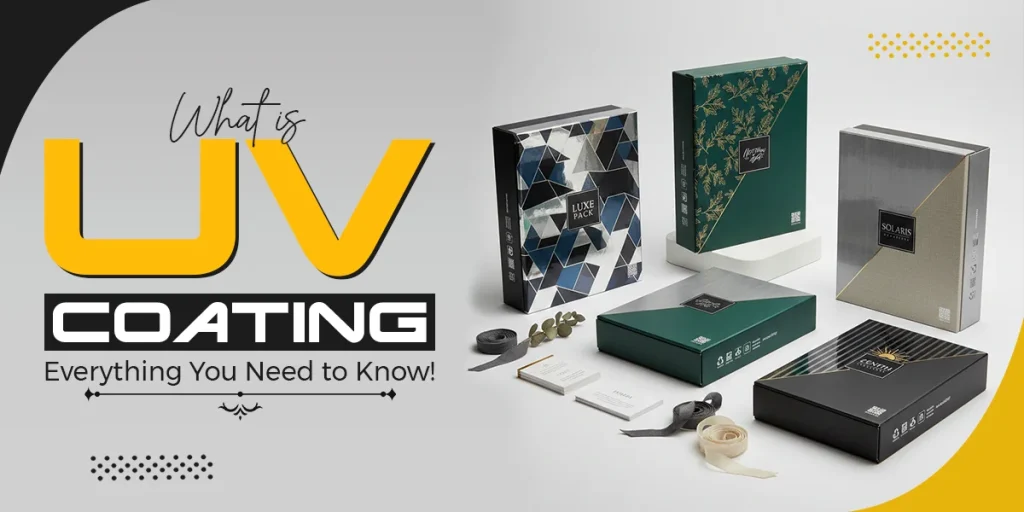
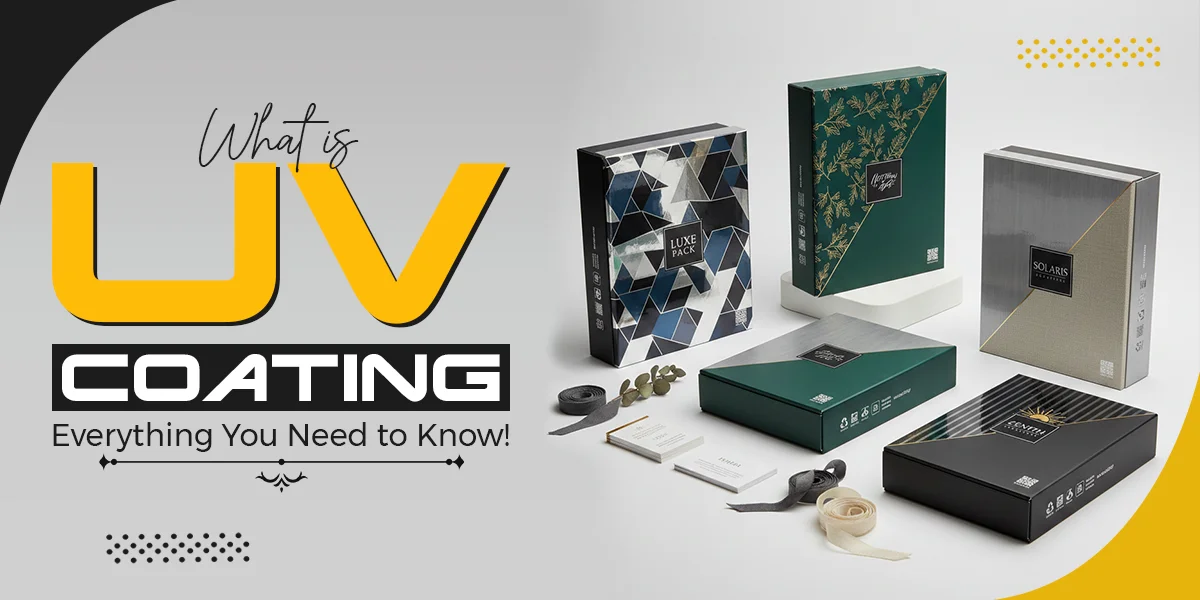
When it comes to the popular finishing techniques for product packaging, UV coating is gaining more popularity. Whether you want a glossy final finish on your product packaging, flyers, business cards, postcards, and other materials, UV Coating is the best way to stand out in your marketing materials.
By using this premium finishing technique, you not only enhance the visual aesthetics but also add more durability to your product packaging.
In this blog, you will learn about what is UV coating, its types, benefits, and other common uses in packaging. For better product quality, UV coating is beneficial for your brand, whether you want packaging, printing, or any other marketing products.
What is UV Coating?
Ultraviolet coating (UV coating) is a liquid coating that is applied to the printed materials, including packaging, that has less drying and cured time. This finishing method is well-known because of the sleek, polished, and premium finishing results. By using ultraviolet coating, you can make the printing elements and colors more appealing and shiny as compared to the overall surface of the packaging and other marketing products.
In this coating process, there are different types of chemicals used, such as polyethylene, calcium carbonate, and kaolinite. UV coating is applied on the single side, front, back, or both sides of the packaging or business cards. Spot UV coating is opted for by the brands to make a certain part of the design stand out, such as the brand logo, photo, or specialized graphics. After learning about what is UV coated, let’s learn about its types.
Types of UV Coating
In the printing industry, there are several types of UV finish options used to help brands get the desired final effects on the packaging or other products. Let’s discuss the most common types:
Gloss UV Coating
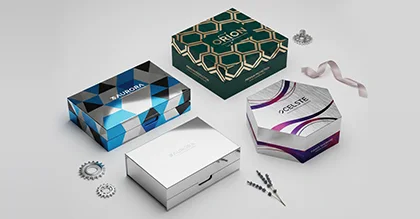
For the shiny surface of the packaging boxes and reflective surface and other products, such as postcards, brochures, and images, this type of coating is an ideal option. UV coated cardstock provides a more appealing visual appeal to products and enhances the perceived value of items.
Matte UV Coating
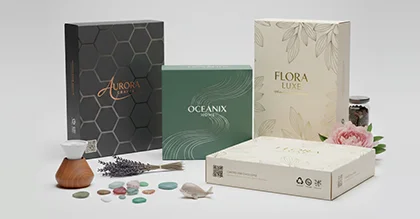
For more affordable finishing options of packaging and other printed materials for a sophisticated and muted appearance, matte UV coatings are one of the best finishing options. It’s less reflective than the spot UV finishing.
Spot UV Coating
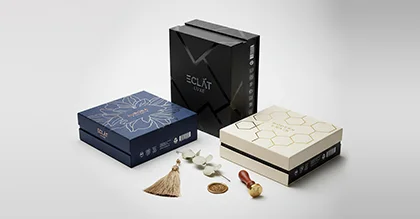
For the luxurious tactile experience and three-dimensional visual appeal of the brand logo, graphics, and certain printing elements, Spot UV coating is a highly important option. Along with the enchanting shimmer, Spot UV provides the contrast between the matte and gloss parts of the printed material surface.
Soft Touch UV Coating
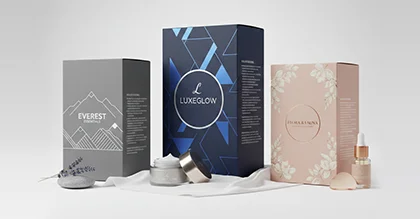
Soft touch coatings are perfect to fulfil the demands of premium packaging for high-end products. It is a protective liquid polymer coating with the help of ultraviolet light to create a soft touch, velvety, and high-end finishing touch to the surface of packaging.
Magic of UV Coating
Ultraviolet protective coatings provide magical benefits to enhance the overall appeal of packaging boxes and other printed materials.
Enhanced Visual Appeal
The high-gloss and matte finishes add a luxurious, rich, shiny, and reflective surface that stands out from the printing elements and catches more eyes. UV coating for printing enhances the details of printing elements and creates a perfect contrast.
Durability and Protection
UV light coating works as a protective layer above the printing materials to keep your products safe from abrasion, smudges, moisture, and scratches. To keep printing elements safe from fading and from environmental damage, UV coating for paper helps packaging and cards to maintain their quality.
Fast Drying Time
With the help of UV light, the ultraviolet coating cures faster to reduce the production time.
Fade Resistance
UV protection coating can keep the printed packaging safe from color fading due to environmental factors, such as sunlight, moisture, and dust.
Energy Efficient
Because of the rapid curing time, spot UV coatings can save energy costs during the printing of bulk product packaging, labels, and stickers.
Safe for the Environment
Modern UV clear coating formulations are free of solvents and emit little to no volatile organic compounds (VOCs). Therefore, it’s environmentally safer as compared to the other traditional coatings.
Is UV Coating Eco-Friendly?
It is a common question in the printing industry that is UV coating is environmental safer. The answer is simple: yes, in some conditions, UV coating is safe for the Earth.
All the UV coatings contain a lower amount of VOCs, and they are solvent-free. Therefore, they do not release harmful chemicals into the surrounding environment during the publication.
Apart from this, the UV-coated paper or packaging can also be recycled after complete use. So, we can say that ultraviolet paper is best to keep the Earth safe from pollution and harmful impacts.
Where is UV Coating Used in Packaging?
To answer the question of where UV-resistant coatings are used, we are here to help you know every detail in a simple way. It’s used in various industries, but is most commonly used in the packaging industry.
Retail Packaging
UV coated cardstock is used to manufacture retail packaging boxes in premium quality for various lightweight products, such as cosmetics, apparel, electronics, and other retail items. You can also design your custom UV printed perfume packaging boxes for your premium quality fragrances. These boxes not only add more stunning visual appeal to products but also resist wear and tear during showcase and shipping.
Food and Beverage Packaging
UV light coatings are not directly food-safe. Therefore, it’s used on the external surface of food packaging boxes.
Promotional and Marketing Materials
Apart from the packaging of products, UV coating printing is used for various marketing and promotional materials, such as business cards, book covers, flyers, catalogs, and brochures.
E-commerce Packaging
Because of the enhancing trend of unboxing, ultraviolet protective coatings inside the packaging provide spell-binding unboxing and create wow factors for customers.
After learning about where are UV-resistant coating used, let’s dive deep to learn about the tips.
Design Tips for UV Coated Packaging
For designing packaging of your products and other promotional materials with ultra violet printing, you should keep these points in mind.
- Use Spot UV Strategically: Spot UV printing is best for brand logo, taglines, or images to get more eyeballs.
- Combine Textures: Pair matte UV finish with gloss UV for an elegant and modern look.
- Consider Soft Touch for Luxury: Using soft touch UV coating on custom packaging can add a more premium touch and value to products.
- Mind the Print Base: A smooth, clean print base ensures better adhesion and effectiveness of the UV clear coating.
- Plan for Eco-conscious Customers: Choosing UV protection coating materials is an ideal option to balance aesthetics with sustainability.
Final Thoughts
UV coating plays an important role in packaging and printing any promotional materials for a premium and reflective finish. Ultraviolet coating can help you get more splendid and affordable packaging for your products. With Silver Edge Packaging, you have the option to choose any UV coating for paper to get the desired final results.
With the help of our UV fined packaging boxes, you can elevate the presentation of your products and stand out your brand among the mess. With UV finish, your product packaging, business cards, brochures, flyers, catalogs, and playing cards remain safe from blur and bleeds.
FAQs
Can UV coating be applied to Kraft packaging?
Yes, UV coating can be applied to Kraft packaging for a more appealing and attractive look.
Does UV coating make packaging waterproof?
UV coating is moisture-resistant, but does not make the packaging fully waterproof.
Is UV coating safe for food packaging?
No, UV coating is not safe for food packaging. So, it’s applied to the outer surface of food packaging.
How long does UV coating last on packaging boxes?
UV coating is durable and can last for months or years, depending on environmental conditions.