Skip to content







In the modern world, climate change is not a problem of a single state but a global issue. There are quite a lot of factors here that become the cause of climate change, among these, packaging waste is also an important factor. From product packing to unboxing, packaging waste has a massive impact on the environment. Thus, we must follow responsible packaging practices.
To save the planet, it is the responsibility of all these packaging manufacturers to urge brands to shift towards sustainable packaging practices. In this way, carbon emissions can be reduced to a great extent. Besides this, at the national and international levels, quite a lot of organizations are working on climate change, among which the United Nations Framework Convention on Climate Change (UNFCCC) is quite popular. These organizations aim to reduce the overall temperature of the world with sustainable practices in our daily activities. With the strict environmental protection law, brands use sustainable packaging, which not only reduces packaging waste but also reduces deforestation and is quite useful in saving plants.
In this article, we will guide you on how sustainable packaging approaches can enhance the brand image, drive customer loyalty, and reduce climate change. Plus methods to biodegrade and recycle the packaging, along with modern strategies to fight climate change.
The Environmental Impact of Packaging Waste
When you use your purchased product and then throw the packaging on open ground or in water, have you ever felt ashamed? Do you know that this same act is done by multiple people, and to what extent it can have a harmful impact on the climate? You must have seen videos often showing how sea animals get trapped in packaging waste or wires. Besides this, commonly used packaging becomes the cause of landfill, sea waste, and pollution, along with packaging waste pollution. Why, because most product packaging boxes are manufactured from plant-based raw materials, which become a cause of deforestation for a long time, along with increasing the global temperature.
Besides this, while disposing of conventional packaging waste, quite a lot of greenhouse gases are released, which makes packaging a major contributor to climate change. Because of this, sustainable packaging brands reduce their carbon footprint, along with reducing carbon emissions too.
What Is Sustainable Packaging?

Packaging whose design and customization aim to reduce environmental pollution, while at the same time enhancing brand trust and ensuring functionality and safety. Such packaging is commonly manufactured from recyclable, biodegradable, and renewable resources. They support packaging waste and pollution reduction strategies.
There are many reasons for the growing popularity of these packaging solutions, some of which are listed below:
- Eco friendly packaging materials help businesses to reduce pollution.
- Recycled materials lower deforestation
- Biodegradable and compostable packaging can break down naturally with time
- Zero-waste packaging concepts that eliminate unnecessary materials
In addition to environmental protection, recyclable packaging solutions play a significant role in increasing brand reputation. Moreover, this packaging helps reduce costs, meets industry regulations, and attracts eco-conscious customers, while considering responsible packaging practices.
Beat Plastic Waste and Carbon Footprint
Biodegradable packaging solutions not only help reduce waste but also significantly lower the carbon footprint. In the long term, it can help brands enhance their business operations. No matter the industry, whether medical, cosmetics, or apparel, reusable packaging solutions help minimize energy consumption.
Over 430 million tons of plastic are produced, and 36 percent is used in the packaging of products. With the help of eco-friendly packaging practices, brands can utilize their resources in the best possible way. After shifting from conventional plastic packaging to recyclable PET packaging, businesses are playing a key role in reducing plastic waste.
When a brand focuses on sustainability, other companies that appreciate biodegradable packaging approaches become willing to collaborate with them. In this way, sustainable packaging approaches not only become popular across the industry but also turn into a growing trend. Recyclable packaging boxes meet regulatory standards as well as consumer expectations, while also reinforcing the importance of sustainable solutions. By using such packaging boxes, brands can reduce their ecological footprint.
Biodegradable Packaging That Breaks Down by Itself
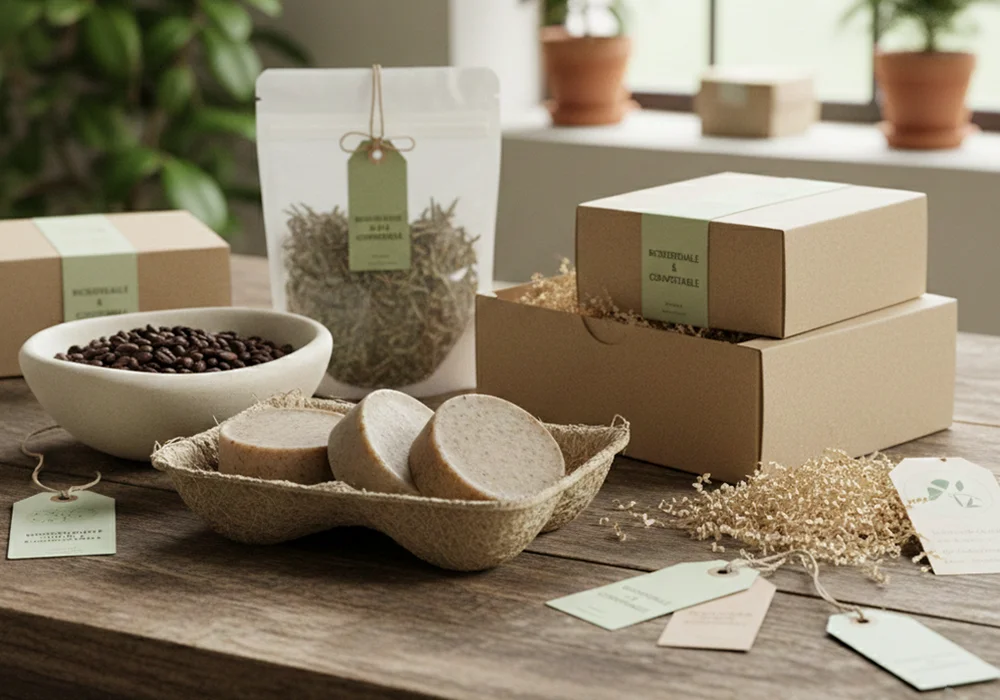
In the modern eco-conscious world, biodegradable packaging is gaining popularity in all industries. These packaging boxes decompose with the help of microorganisms into soil without leaving harmful residue.
Biodegradable Materials
Biodegradable materials can break down into the soil directly without leaving any waste, enriching the soil. On the other hand, traditional plastic materials take hundreds of years to decompose and contribute to landfill waste. Biodegradable materials help brands to reduce sea and land pollution. Brands that are using biodegradable packaging for their products can receive positive reviews from eco-conscious customers, decreasing carbon emissions. Apart from these benefits, you can also get the reputation of your brand in the market.
In biodegradable materials, kraft, molded fiber, starch, and other plant-based materials are popular.
Types of Biodegradable Packaging
By utilizing various biodegradable materials for packaging, brands can manufacture various types of packaging for products, such as molded fiber packaging, paper-based, starch-based, and other plant-based compostable packaging. These custom boxes with logo help brands to win the hearts of eco-conscious customers.
Method to Biodegrade Packaging
Let’s learn how to decompose the packaging easily and quickly.
- Preparation: Break the packaging into smaller pieces, like 5cm, and wash the container.
- Home Composting: If you want to decompose your product packaging at home, add it with kitchen or carbon sources and leave them for a few weeks for decomposing process. Paper and cardboard can take 2-6 weeks to decompose with the availability of sufficient oxygen and proper conditions. On the other hand, cornstarch packaging takes 2-4 weeks, and mushroom packaging can take 30-90 days.
- Industrial Composting: Commercially certified materials (ASTM D6400, EN 13432) require special facilities, such as controlled moisture and heat between 55 and 70 °C.
By decomposing the product packaging, brands can mitigate the packaging waste without making any harmful impact on the soil.
Recyclable Packaging
In eco-friendly packaging systems, recyclable packaging is also well-known in various industries because of its recyclable features to help brands to reduce the need for new raw materials. According to research, one ton of cardboard or any paper can save approximately 17 trees. Recyclable packaging can turn into new packaging, reducing the chances of deforestation for a long time.
Recycled Packaging Materials
Cardboard, cardstock, and PET packaging materials are commonly used recyclable materials. They cut down the energy use and reduce the emission of greenhouse gas. To manufacture recyclable, sustainable packaging, these materials are the cornerstone.
How to Recycle Packaging
In this section, we will guide you to a simple method to recycle your customized eco-friendly packaging boxes. Here is step by step guide:
Empty and Clean the Packaging
Remove all non-recyclable content, get food and liquid out, and ensure that all the packaging materials are dry before going to the next step.
Separate Materials and Components
Remove the tape or plastic materials from your cardboard or any other recyclable materials. In the case of plastic packaging, you must separate the bottles and plastic film.
Check the Local Roles and Symbols
You can visit the local market or visit the waste management website in your area to submit the materials for the recycling process.
Reuse or Recycle Your Packaging
Check the quality of the packaging. Reuse the packaging that is suitable to pack or arrange other things, such as rigid boxes. Otherwise, you can put all the things for the recycling process in a recycle bin.
Benefits
Recycled packaging can help businesses to reduce the need for any plant source or new raw material for pulp. By recycling tons of paper materials, you can keep the earth green by preventing the conversion of wood into pulp. If the packaging industries all over the world focus on the recyclable or eco-friendly packaging approaches, they can reduce deforestation because of the paper need in the industry.
Packaging Waste Reduction and Zero Waste Goals
Not only packaging companies but also brands must set their goals to reduce packaging waste because of their zero-waste packaging solutions. All over the world, thousands of brands are following the eco-friendly packaging revolution and modern strategies to reduce packaging waste. If you want to know about the strategies that can help you to reduce the landfill, stay tuned with us.
Strategies to Reduce Packaging Waste
Here are some effective strategies that can help businesses to follow them for reducing packaging waste and climate change due to pollution.
You must choose the minimalist designs for your product packaging that need minimal materials during the production process.
- Product manufacturers should offer the refill facility to customers by using reusable containers.
- By choosing the zero waste packaging, brands can also eliminate the disposability.
- Brands must prioritize the reuse and recycling of eco-friendly packaging over disposal.
Food Brands: The Major Contributors to Landfill Volume
The food industry generates 40% of the plastic waste globally. This is because of the use of single-use plastic for the packaging of food items. Now, food brands are also shifting toward the brown kraft paper packaging or recyclable paper packaging to pack their food items. By following sustainable alternatives, they can fight against the harmful environmental impacts.
Why Sustainable Packaging Matters for Climate Change
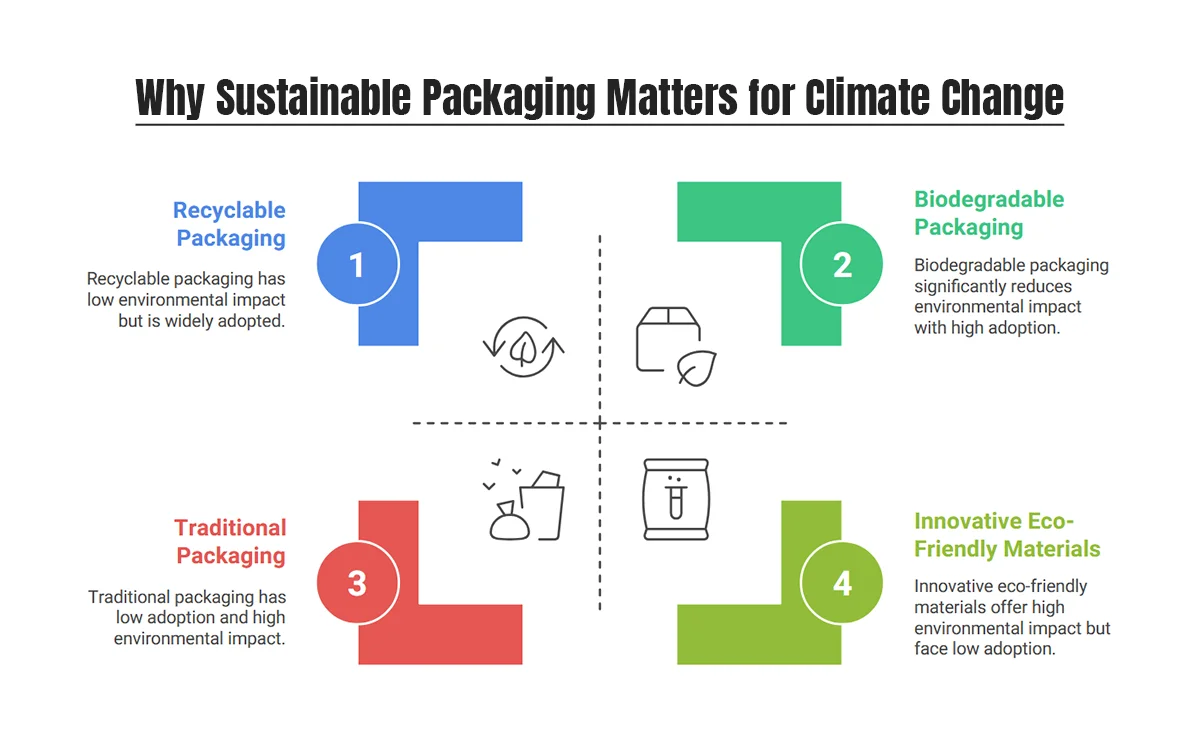
Pollution and waste due to product packaging can directly impact the environment. So, it’s connected with climate change. By following sustainable or eco-friendly alternatives, businesses can reduce energy consumption, greenhouse gas emissions, and pollution. Here are a range of benefits of using sustainable custom boxes for products.
- Reduced carbon footprint
- Conservation of natural resources
- Less waste in landfills and oceans
- Support for a circular economy
When responsible packaging practices become the norm, packaging transforms from a climate problem into a climate solution.
A Shared Responsibility – Using Sustainable Packaging
Being a responsible citizen is an act or duty of all of us to follow sustainable packaging approaches, whether manufacturers, brands, governments, or consumers. Environmental protection organizations existing in every state should make strict rules so that producers and brands follow eco-friendly packaging regulations in every situation.
Therefore, all of us should understand biodegradable, recyclable, and sustainable packaging as a need as well as a responsibility, and use it so that land waste and pollution can be reduced. We should put the wrapper or box in the dust or recycle bin to help the waste management authorities reduce the waste and environmental pollution.
Conclusion
Sustainable packaging is a major factor in reducing the waste and pollution of the environment due to traditional product packaging. By following eco-friendly packaging strategies, brands can reduce waste, lower greenhouse gas emissions, and support renewable resources. It will have a positive impact on climate change. If a brand or individual uses recyclable, biodegradable, and eco-friendly packaging, every step will be appreciated by modern consumers because sustainability matters.
If you are looking for a trusted and authorized packaging supplier to meet your products’ eco-friendly packaging needs, contact us. We hope this well-researched article helps you to shift your brand toward sustainable practices to emerge as an eco-conscious brand in the market.